
The True Cost of Machine Parts: Why the Cheapest Option Isn't Always the Best
As Project Manager of Brightstar Prototype CNC Co., Ltd, I've seen too many procurement professionals drawn in by seemingly low quotes, only to pay dearly for hidden costs later. Last year, a European client referred to us a failed part order they had with a previous Chinese subcontractor. That subcontractor's initial quote was 30% lower than our cost analysis suggested, but the first batch of parts was entirely scrapped because they couldn't meet precision requirements. It was then that the client realized supplier selection is far more complex than simply comparing numbers.
This article will reveal the hidden costs in machine parts procurement, helping you establish a more scientific supplier evaluation system.

The Iceberg Theory: Visible vs. Invisible Costs
The figures on procurement quotes often reflect only a small portion of total costs. According to industry research, a CNC machine's initial purchase price typically accounts for only 30% to 40% of its total cost of ownership, with the remainder distributed across operation, maintenance, and support aspects.
These hidden costs include equipment depreciation, energy consumption, production losses from maintenance downtime, tool replacement frequency, and scrap rates due to inconsistent quality. For example, when machining difficult materials like titanium alloys or superalloys, tool wear rates can be over 70% faster than when machining aluminum parts, directly impacting tool costs and production efficiency.
.png?imageMogr2/format/webp)
Hidden Cost 1: Scrap Losses from Unstable Quality
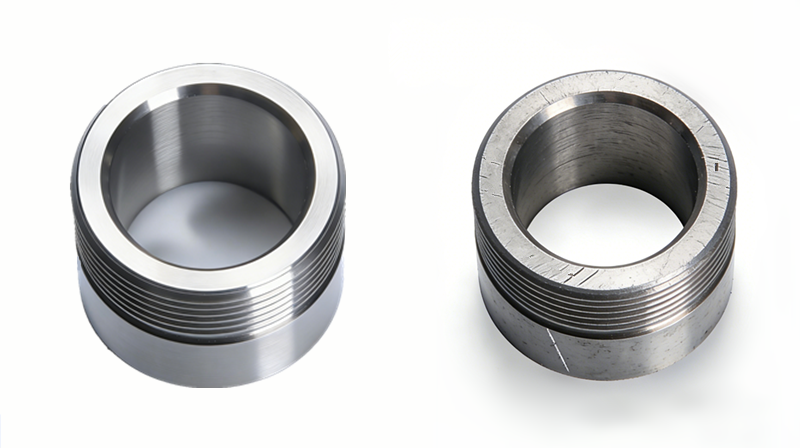
When a supplier's quote is unbelievably low, it often means compromises in quality control. A dimension missed by 0.012mm because the supplier took "break sharp edges" too literally can scrap an entire downstream assembly. In aerospace-related supply chains, the average cost of one outsourced quality escape runs ,000 to ,000, not including subsequent inspection, rework, expedited shipping, and line-down charges.
Hidden Cost 2: Chain Reactions from Delivery Delays
Time is money, and this rings especially true in manufacturing. Factors affecting custom machining lead times include process complexity, batch size, and supply chain preparation time. Reasonable cycles for conventional metal parts typically range from 7 to 15 working days, while complex parts may extend to 4 to 6 weeks.
When suppliers promise aggressive delivery but fail to deliver, your project faces chain reactions: downstream assembly delays, product launch postponements, missed market windows. A procurement manager once told me: "A supplier who delivers on time, even at 10% higher price, is more cost-effective than a cheaper supplier who delivers late."
Hidden Cost 3: Rework from Poor Communication
Language barriers, time zone differences, and cultural differences can lead to serious communication misunderstandings. One ambiguous annotation on a drawing, if not clarified promptly, can scrap an entire batch. At Brightstar, we employ a "closed-loop confirmation" mechanism: upon receiving drawings, We always put key requirements in writing to ensure mutual understanding.
Hidden Cost 4: Design Compromises Due to Limited Technical Capability
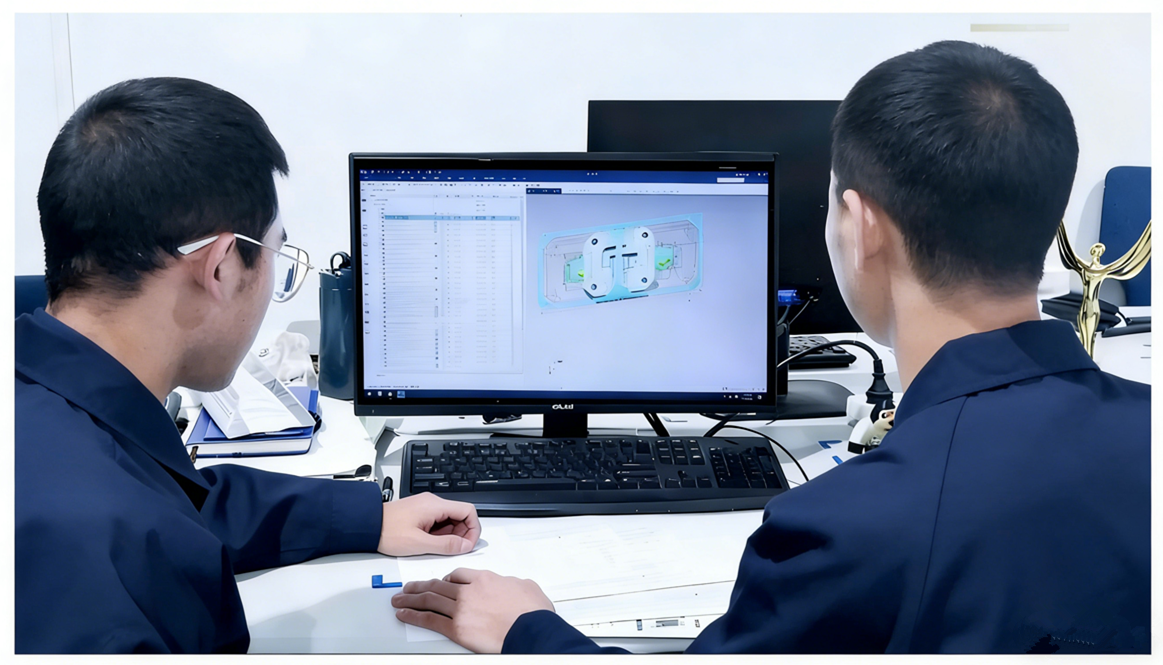
The best suppliers aren't just order takers; they're design optimization partners. When suppliers lack engineering capability, they might simply tell you "this can't be done," forcing design compromises. Capable suppliers will say: "This feature can be adjusted like this, maintaining functionality while reducing cost."
A German client initially insisted on reducing costs by per part. Through analyzing their production process, we discovered that redesigning fixtures to reduce tool changeover time could achieve savings per part, far exceeding their goal. This kind of value creation is something low-price suppliers cannot provide.
Hidden Cost 5: Long-Term Risks of Absent After-Sales Service
When problems arise with parts, you need a partner who responds quickly, not an adversary who shifts blame. Reliable suppliers should have clear after-sales service processes, including quality issue traceability, corrective actions, and preventive measures.
Total Cost of Ownership: A Smarter Evaluation Approach
Based on the above analysis, we recommend adopting TCO thinking when evaluating suppliers. This includes: initial purchase price, quality-related costs, delivery-related costs, communication-related costs, technical support, and after-sales service value.
When calculating TCO, consider equipment utilization. In the Canadian manufacturing context, factories with utilization rates above 70% report cost per part 15% to 25% lower than those with utilization rates between 40% and 50%. A ,000 CNC machine sitting idle 30% of the time translates to tens of thousands of dollars in costs being amortized over the parts produced each year.

Case Study: The Painful Lesson Behind a 30% Lower Price
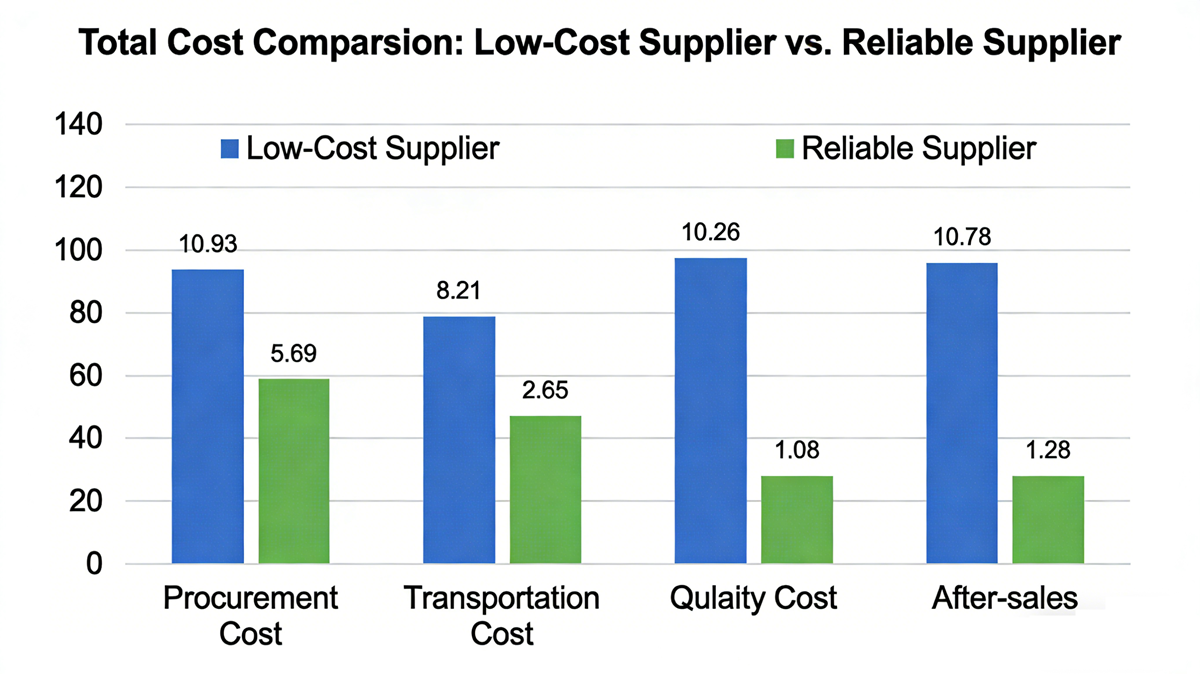
Returning to the opening case. That European client chose a supplier quoting 30% less, but the first batch of parts was entirely scrapped due to failing precision requirements. They not only lost material and shipping costs for that batch, but also faced: expedited fees for emergency replacement suppliers, market losses from a two-week project delay, and trust costs of re-explaining to management. Finally calculation showed total costs exceeding those of directly choosing a reliable supplier by over 40%. However, by making the right choice of machining parts suppliers from the very beginning, unnecessary cost losses can be avoided, and even the manufacturing cost of parts can be reduced.
Frequently Asked Questions
Q: How do I identify suppliers likely to generate hidden costs?
A: Be wary of quotes significantly below market levels; request detailed process breakdowns and quotation detail; ask for past client cases and on-site visits.
Q: What's a reasonable price range for small-batch custom parts?
A: This depends on material, complexity, and precision requirements. We recommend obtaining quotes from 2-3 reputable suppliers, comparing not just price but what's included.
Q: How do I balance price and quality?
A: Establish a supplier classification system: select proven high-quality suppliers for key components, while cost priority may be considered for non-critical parts.
Procurement decisions shouldn't rely solely on intuition or simple price comparison. Brightstar Prototype CNC Co., Ltd invites you to experience transparent procurement processes. Contact us for a free TCO consultation, and we'll analyze your current suppliers' true cost structures, helping optimize your supply chain decisions. Meanwhile, upload your drawings for a detailed quote based on value, not just price.
Reference
ISO - International Organization for Standardization. Quality management principles: The foundation for success.
ASTM International. Standard Methods for Conducting Machining Tests of Wood and Wood-Base Materials.
Outsourcing versus in-house CNC Machining: total cost analysis for strategic decisions.
Engineering.com. Protolabs adds new CNC machining capabilities for prototyping.
MDPI. Development of Automatic Inspection and Optimization Platform for Computer Numerical Control Machining Using Automatic Optical Inspection and Artificial Intelligence.