
What is turning-milling-composite-machining? Complete Analysis of Definition, Advantages and Applications
As manufacturing puts forward higher requirements for processing efficiency, precision and complexity, traditional single processing methods (such as turning or milling) can hardly meet modern manufacturing demands. As an advanced mechanical processing technology, turning-milling-composite-machining integrates turning (for rotating surfaces), milling (for planes, grooves, curved surfaces), drilling, boring and other processes in one equipment, realizing complete processing of complex parts in one clamping. This technology effectively solves pain points of traditional processing and has become one of the core technologies in high-end manufacturing fields such as aerospace, automotive and medical treatment. As a professional machining service provider, Brightstar Prototype CNC focuses on turning-milling-composite-machining and provides customers with one-stop solutions from design to manufacturing.

1. What is turning-milling-composite-machining?
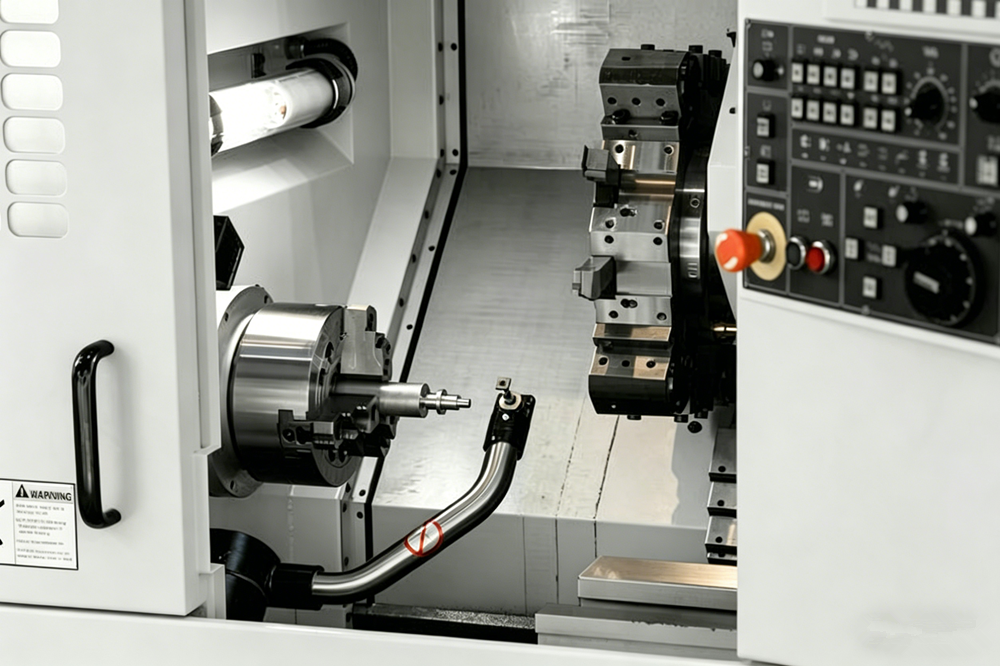
turning-milling-composite-machining is an advanced integrated processing technology that combines turning, milling and other processes on one CNC machine tool. It completes multi-process machining of complex parts through the combined motion of workpiece rotation and tool rotation, equivalent to a combination of CNC lathe and machining center. Compared with traditional "turn first then mill" or "mill first then turn", there is no need to transfer workpieces between multiple machines or repeatedly clamp and position. turning-milling-composite-machining is not a simple superposition of processes, but uses turn-mill combined motion to achieve higher processing efficiency and precision. It adopts high-precision built-in spindles and multi-axis linkage control to ensure consistency and precision of parts. Multiple processes of complex parts are completed in one clamping, especially suitable for complex parts with both rotating surfaces and non-rotating features (such as gear shafts, pin shafts, complex housings, etc.). Regarded as an important development direction of advanced manufacturing technology internationally, this technology is widely used in high-precision and high-complexity parts manufacturing.
2. Working Principle of turning-milling-composite-machining
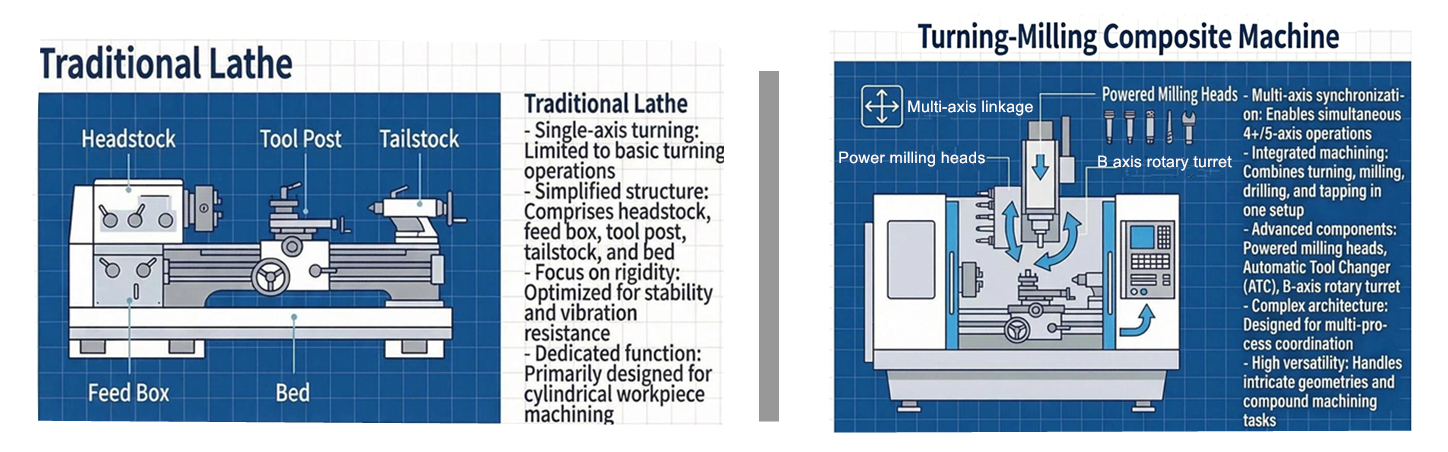
The working principle of turning-milling-composite-machining is based on precise coordination of multi-axis linkage and multi-process integration, relying on three core links: CNC system control, spindle rotation and tool movement, to achieve efficient and precise machining of workpieces.
Core Working Mechanism
Multi-axis linkage control: Turn-mill composite machines are usually equipped with X, Z axes (for turning feed) and Y, C axes (for milling feed); high-end models also have B axis (milling head swing axis) to realize 5-axis linkage machining. Under coordinated control of CNC systems (such as FANUC, SIEMENS), spindles and feed axes move precisely to ensure tools process at optimal angles and positions.
One clamping and multi-process integration: After workpiece is clamped once, the machine automatically switches turning tools, milling cutters, drills and other tools to complete external turning, groove milling, drilling, tapping and other processes. This avoids positioning errors caused by multiple clamping and ensures position accuracy of part features (usually up to 0.005–0.01mm).
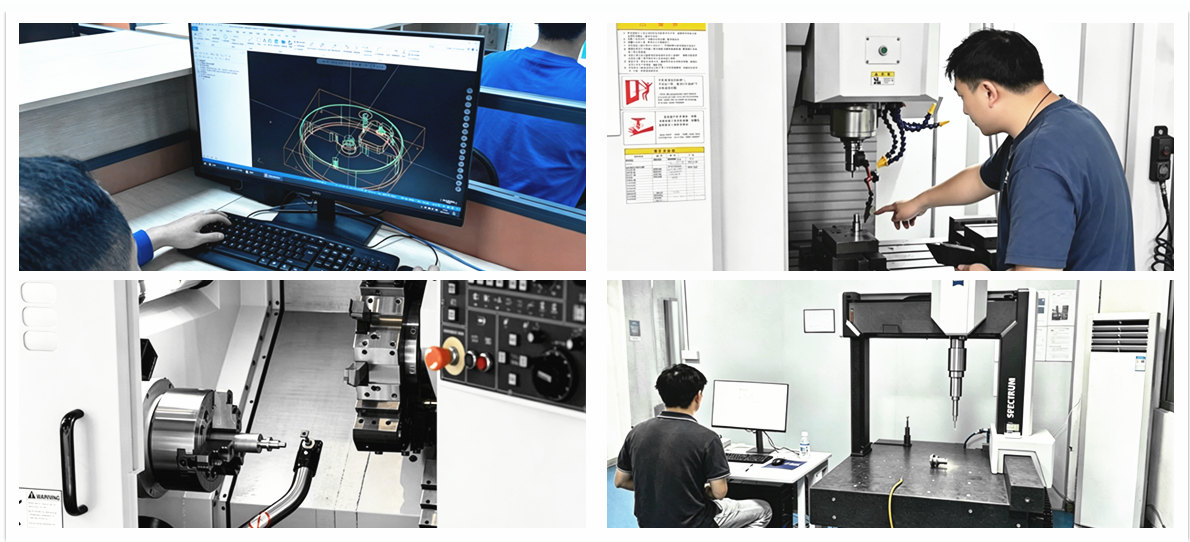
Intelligent programming and cutting optimization: Professional CAM software (such as UG, Mastercam) is used for tool path planning. The software automatically generates composite machining programs according to geometric features of workpieces, with tool path simulation to avoid overcutting and collision in advance. Meanwhile, software optimizes cutting parameters (cutting speed, feed rate) to balance efficiency and tool life.
Key Processing Steps
Digital modeling and process planning: First, 3D model of workpiece is established via CAD software, defining dimensional tolerance, geometric tolerance and surface quality requirements; then processing sequence is planned according to cutting characteristics of workpiece materials (aluminum alloy, stainless steel, titanium alloy, etc.), following the principle of "roughing first then finishing, turning first then milling, datum first then features".
Tool selection and clamping design: Suitable tools are selected according to processes — turning tools for rotating surfaces, end mills and ball mills for planes and curved surfaces; high-precision chucks (such as 3-jaw self-centering chucks) or special fixtures are used for clamping to ensure workpiece rigidity. Auxiliary supports are designed for thin-walled parts to avoid deformation caused by cutting force.
Parameter optimization and machining execution: Cutting parameters are matched according to tool and workpiece material. For example, when machining 45# steel, rough turning speed is 80–120m/min, finish turning increased to 150–200m/min, ensuring precision and efficiency; real-time monitoring system feeds back cutting status to avoid abnormalities.
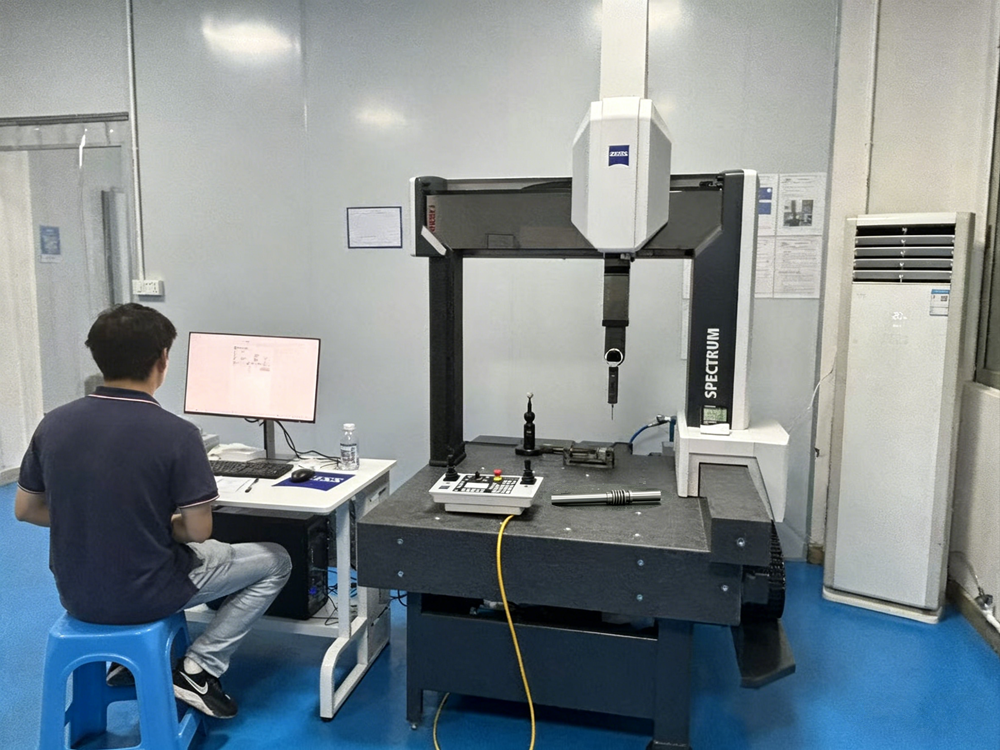
Quality inspection: After machining, high-precision equipment (CMM, roundness tester) is used to inspect dimensional and geometric tolerances to meet design requirements.
3. Core Advantages of turning-milling-composite-machining
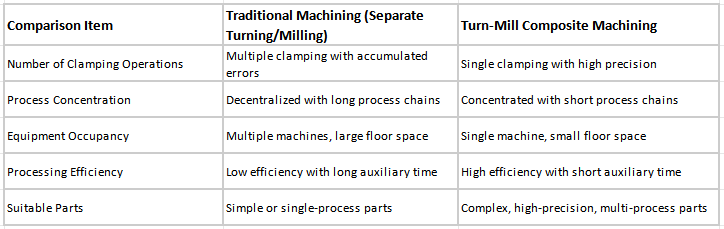
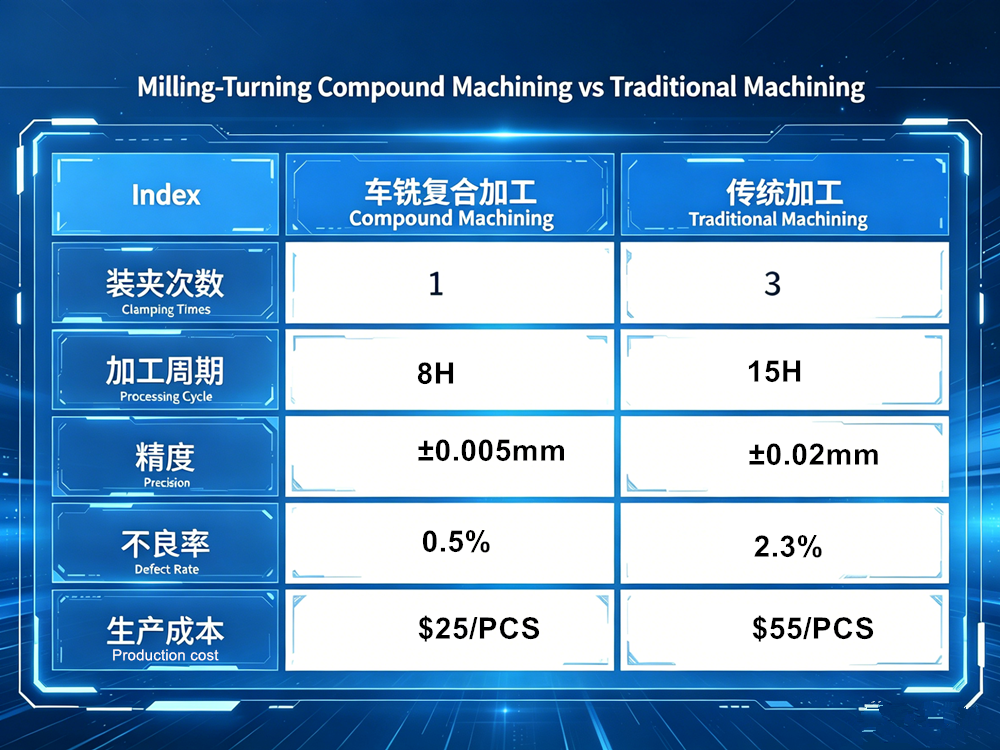
Compared with traditional separate turning and milling, turning-milling-composite-machining has outstanding advantages in precision, efficiency, cost and applicability. Based on Brightstar's experience, specific advantages are as follows:
3.1 Improve machining precision and reduce error accumulation
The biggest advantage of turning-milling-composite-machining is "one clamping", avoiding positioning errors and cumulative errors from repeated clamping. Equipped with high-precision built-in spindles and on-line inspection, machining precision reaches ±0.005mm. Taking Brightstar's automotive gear shaft as example, coaxiality and runout precision are 30% higher than traditional process, fully meeting high-precision requirements of core automotive parts.
3.2 Shorten production cycle and improve efficiency
turning-milling-composite-machining integrates multiple processes, greatly shortening process chain. It reduces auxiliary time for re-clamping and transferring, as well as waiting time for tooling. According to Brightstar data, compared with traditional processing, production cycle is shortened by 40%–60%, efficiency greatly improved. For example, a complex pin shaft requiring turning, milling, drilling and tapping takes 8 hours traditionally, only 5 hours with turn-mill composite.
3.3 Reduce production cost and optimize resource allocation
Although single machine cost is relatively high, it reduces number of machines, saves floor space, and lowers tooling, labor and maintenance costs. For a long-term aerospace customer of Brightstar, overall production cost reduced by 25%–35%, floor space saved by 30%, effectively cutting fixed assets and operation costs.
3.4 Strong applicability for complex parts
turning-milling-composite-machining handles various complex parts, especially those with both rotating surfaces and non-rotating features (gear shafts, turbine blades, precision molds, etc.), which are difficult for traditional processing. It machines aluminum alloy, stainless steel, copper, titanium alloy, PTFE (Teflon) and other materials, suitable for low-volume prototyping and mass production. Brightstar has successfully processed complex thin-walled parts, special-shaped shafts and solved many difficult machining problems.
3.5 High stability and low reject rate
The whole process is intelligently controlled by CNC system, reducing human errors. Tool path simulation avoids overcutting and collision in advance. Real-time monitoring detects abnormalities (tool wear) and pauses timely, ensuring stable quality. Brightstar's reject rate is below 0.5%, much lower than industry average of 3%, effectively ensuring pass rate.
4. Key Components and Processing Principles
Performance of turning-milling-composite-machining depends on quality of key components and reasonability of principles. Understanding these helps better select services and ensure quality.
4.1 Key Components
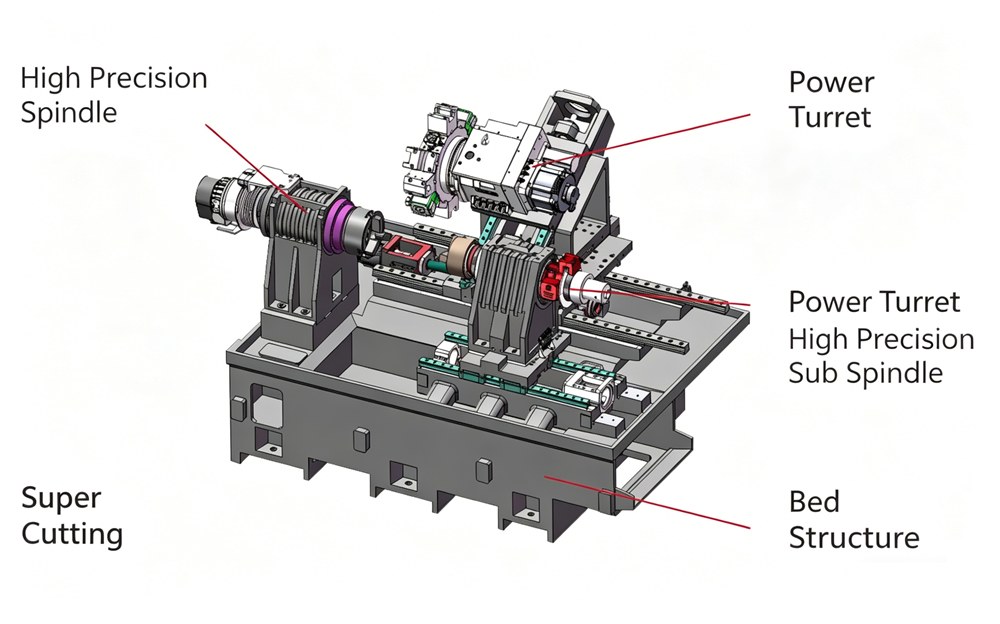
Spindle: Core component, usually high-precision built-in spindle, with rotation (for turning) and indexing (for milling) functions, ensuring high-speed and high-precision rotation. Brightstar uses imported high-precision spindles with strong stability and long service life.
Feed axes: Including X, Y, Z, C axes, multi-axis linkage realizes flexible machining of complex curved surfaces. Brightstar's linear guides and ball screws are imported to ensure smooth and precise movement.
Tool turret: Equipped with power turret, holding multiple tools (turning, milling, drilling, etc.), realizing automatic tool change, reducing time and improving efficiency. Brightstar's high-speed turret changes tools in less than 0.5s.
CNC system: "Brain" of machine, adopting international mainstream systems (FANUC, SIEMENS), with stable operation, convenient programming and strong anti-interference, realizing intelligent control of complex programs.
Clamping fixtures: High-precision chucks or special fixtures ensure rigidity and positioning accuracy during machining.
4.2 Core Processing Principles
Turning principle: Workpiece rotates at high speed, turning tool moves linearly along X/Z axes, machining rotating surfaces (external circle, inner hole, end face), following "workpiece rotation + tool linear movement".
Milling principle: Tool rotates at high speed, workpiece moves along X/Y/Z axes (or tool moves relative to workpiece), machining planes, grooves, curved surfaces, following "tool rotation + workpiece linear movement".
Multi-axis linkage principle: Under coordinated control of CNC system, spindle (C axis) and feed axes move together, keeping tool at optimal angle and position, avoiding interference and ensuring quality of complex curved surfaces.
5. Common Materials for turning-milling-composite-machining
Material selection directly affects efficiency, quality and cost. Brightstar has rich experience in various materials, matching suitable parameters to ensure results. Common materials are as follows:
5.1 Common Metal Materials
Aluminum alloy (6061, 7075, etc.): Light weight, good thermal conductivity, easy to machine, low cost, suitable for automotive parts, electronic components. Surface roughness Ra 0.2–1.6μm, meeting most precision requirements.
Stainless steel (304, 316, etc.): Corrosion-resistant, high strength, suitable for medical, food, aerospace precision parts.
Copper & copper alloy: Good electrical and thermal conductivity, suitable for electrical components, connectors.
Titanium alloy: High strength, corrosion-resistant, suitable for aerospace, medical high-end fields. Difficult to machine; Brightstar uses high-hardness tools and low-speed high-feed technology to reduce wear and improve quality.
5.2 Other Materials
Besides metals, it machines PTFE (Teflon), engineering plastics and other non-metals, suitable for chemical, electronic and special fields.
Material Selection Suggestions
Choose aluminum alloy for cost-sensitive and lightweight products; stainless steel for corrosion resistance; titanium alloy or copper alloy for high-end precision products.
Select materials according to application environment, performance requirements and machining cost. Brightstar's engineering team provides professional advice to balance performance and cost.

6. Types of turning-milling-composite-machining
Classified by machine structure, method and application, suitable for different demands:
6.1 By Machine Structure
Horizontal turn-mill composite machine: Spindle horizontal, suitable for long shaft parts (gear shafts, pin shafts), high stability and precision, most widely used.
Vertical turn-mill composite machine: Spindle vertical, suitable for large-diameter disc parts (flanges, gears), small footprint, convenient clamping, ideal for mass production of large parts.
6.2 By Processing Method
Turning-dominated turn-mill: Turning as main process, milling auxiliary, suitable for parts mainly with rotating surfaces and few milling features (simple shafts with keyways), cost-effective, suitable for small batches.
Milling-dominated turn-mill: Milling as main process, turning auxiliary, suitable for parts with complex non-rotating surfaces (curved surfaces, special grooves), high machine performance required, suitable for high-precision complex parts.
6.3 By Axis Number
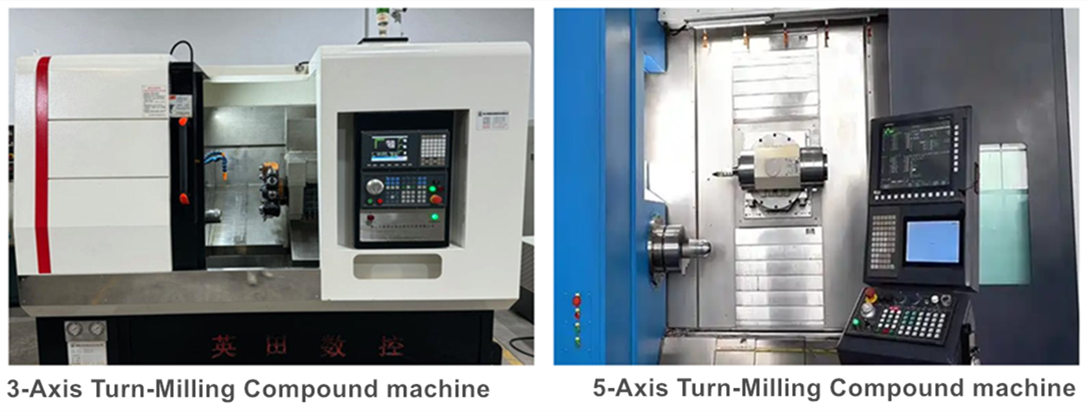
3-axis turn-mill: Equipped with X, Z, C axes, suitable for basic turn-mill (external turning, simple grooves), low cost, suitable for simple parts.
5-axis turn-mill: Equipped with X, Y, Z, C, B axes, 5-axis linkage, suitable for complex curved parts (turbine blades), high precision and flexibility, development direction of high-end machining.
7. Typical Application Scenarios and Brightstar Cases
With advantages of high precision, efficiency and strong applicability, turning-milling-composite-machining is widely used in various fields. Common scenarios and Brightstar cases are as follows:
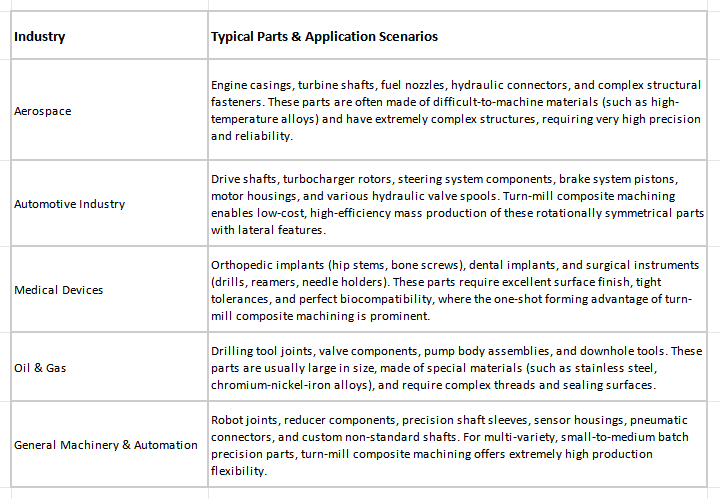
7.1 Aerospace
Aerospace parts (landing gear pins, turbine blades, aero-engine components) require extremely high precision, strength and reliability, mostly multi-process complex parts. turning-milling-composite-machining realizes one-clamping complete processing, ensuring precision and consistency.
7.2 Automotive Manufacturing
Core automotive parts (gear shafts, drive shafts, engine components) have large demand, high precision and short lead time. turning-milling-composite-machining greatly improves efficiency and ensures consistency.
7.3 Electronics & Medical
Electronic components (connectors, sensor housings) and medical parts (surgical instruments, medical device components) are small, high-precision and complex-structured. turning-milling-composite-machining realizes precise machining of small complex parts.
7.4 Precision Mold
Precision mold parts (mold cores, inserts) have complex structure and high precision requirements, directly affecting mold quality. turning-milling-composite-machining processes complex curved surfaces and grooves, ensuring precision.
7.5 Brightstar Case
A well-known automotive parts manufacturer needed mass production of 45# steel gear shafts for transmission system. The shaft has complex structure with multiple external circles, keyways, threads and high-precision steps. Traditional processing requires rough turning, finish turning, milling, drilling and other processes, repeated clamping between different equipment, leading to long cycle, large cumulative error, high labor input, hardly meeting "batch + short lead time + low cost" requirements.
Processing Difficulties
Material: 45# steel, high hardness after quenching and tempering, high requirements for tool life and parameters
Multiple asymmetric structures (keyways, flats, oil holes) on gear shaft
Strict coaxiality, cylindricity and end runout (tolerance grade IT6)
Monthly demand 2500 pieces, balancing efficiency and yield
Brightstar Solution: Integrated turn-mill machining, one clamping, multi-process integration
Adopt turn-mill machining center (with power turret + C axis), completing external turning, facing, keyway milling, drilling, tapping, thread turning in one equipment and one clamping. Use special 45# steel turn-mill inserts with high-pressure internal cooling to improve cutting speed and tool life. Adopt synchronous machining strategy (overlapping turning and milling paths) to reduce idle time, add on-line probe detection to automatically compensate tool wear.

8. How to Choose the Right turning-milling-composite-machining Service
Choosing a professional supplier is key to ensuring quality, lead time and cost. As a professional prototype and CNC machining enterprise, Brightstar summarizes selection criteria for you:
8.1 Inspect Enterprise Strength
Check if equipped with high-precision turn-mill machines (such as 5-axis), imported or domestic, directly affecting precision and efficiency. Check for professional engineering team (programmers, operators, inspectors) capable of process planning, programming and quality control.
8.2 Focus on Processing Capacity
Check machining precision (positioning accuracy, surface roughness) to meet product requirements. Check material capacity, whether processing various materials (titanium alloy, stainless steel) to meet material demands. For mass production, check mass capacity and stable lead time.
8.3 Emphasize Service Quality
Check customization ability to provide tailored solutions (special fixtures, process optimization). Check complete quality control system (incoming, in-process, outgoing inspection) to ensure pass rate. Check complete after-sales system to solve quality problems timely.
9. Frequently Asked Questions
What is turning-milling-composite-machining?
turning-milling-composite-machining is an advanced CNC technology that combines turning, milling, drilling, tapping, and boring in a single machine with one clamping. Unlike traditional processes that require moving parts between lathes and mills, turn-mill machining completes complex parts in one setup, eliminating positioning errors, reducing cycle time by 40%–60%, and achieving precision up to ±0.005mm. It is the standard solution for complex shafts, gear shafts, turbine components, and parts with both rotational and non-rotational features.
What are the advantages over traditional machining?
Compared to traditional separate turning and milling, turning-milling-composite-machining delivers four quantifiable advantages: higher precision (error accumulation eliminated, ±0.005mm achievable), faster delivery (production cycle shortened by 40%–60%), lower cost (reduced labor, fixture, floor space, and work-in-progress inventory), and stronger capability for complex parts (keyways, flats, cross holes, threads, and curved surfaces in one setup). Additionally, defect rate is controlled below 0.3%, far lower than the industry average of 1%–3%.
What materials can be processed?
turning-milling-composite-machining supports a wide range of metals and non-metals. Common metals include aluminum alloys (6061, 7075), stainless steel (304, 316), carbon steel (45#), copper, brass, and titanium alloy. Non-metal materials include PTFE (Teflon), PEEK, acetal, and other engineering plastics. This flexibility makes turn-mill suitable for aerospace, automotive, medical, electronics, and industrial equipment applications, from prototyping to high-volume production.
What precision can be achieved?
turning-milling-composite-machining consistently achieves machining precision of ±0.005mm (IT6 tolerance class) and surface roughness down to Ra 0.2μm on typical metals. This means coaxiality, circular runout, and positional tolerances are reliably held without secondary operations. For context, this precision meets or exceeds most aerospace, automotive transmission, and medical device requirements. On-machine probing and CMM verification (Zeiss) ensure every critical feature is within specification.
How fast is the lead time?
Lead time depends on part complexity, material, and quantity. For low-volume prototypes (1–10 pieces), typical delivery is 1–3 working days. For high-volume production (100+ pieces), lead time ranges from 3–7 working days. Expedited service is available for urgent projects, with qualified parts delivered in as fast as 24 hours. All lead times include one-setup turn-mill machining, inspection, and quality reporting — no hidden delays for secondary operations.
turning-milling-composite-machining, as a core integrated technology in modern precision manufacturing, with core features of "one clamping, multi-process integration, multi-axis linkage", effectively breaks bottlenecks of traditional separate turning and milling, showing irreplaceable advantages in precision, efficiency and cost control. It not only realizes high-precision machining of complex parts, but also greatly shortens production cycle, optimizes resource allocation, suitable for high-end fields such as aerospace, automotive, precision mold.
For enterprises, choosing turning-milling-composite-machining is key to improving product quality and efficiency, and an important measure to enhance market competitiveness.
10. turning-milling-composite-machining Solutions by Brightstar Prototype CNC
Brightstar is equipped with advanced turn-mill composite machines to meet various processing demands, and has a technical team with over 10 years of experience, providing one-stop solutions from product design optimization to machining and delivery. Core highlights: high-precision machining capability up to ±0.005mm, surface roughness Ra 0.2μm, far exceeding industry standards, easily meeting strict high-precision requirements of various industries. Rich experience in various metal and non-metal materials, customizing parameters for different materials. Complete production line flexibly supports small-batch prototyping and mass production. Professional quality inspection team and high-precision Zeiss CMM double ensure product pass rate up to 99.5%. In addition, Brightstar provides all-round high-quality service, complete production scheduling system supports urgent processing, fastest 24-hour delivery of qualified products. Helping enterprises achieve efficient, precise, low-cost production. Whether you are in R&D stage (small-batch prototyping) or mass production stage (bulk parts), whether processing simple shafts or complex curved / special-shaped parts, Brightstar relies on high-precision advantages to provide one-stop turning-milling-composite-machining service. We will formulate optimal solutions according to your product demands, material characteristics and precision requirements, ensure qualified quality and on-time delivery, accelerate your project implementation. Contact us now with your processing needs, our engineers will provide professional technical consultation and quote service within 24 hours!
Disclaimer: For technical reference only. Specific machining solutions depend on actual part requirements and production conditions.