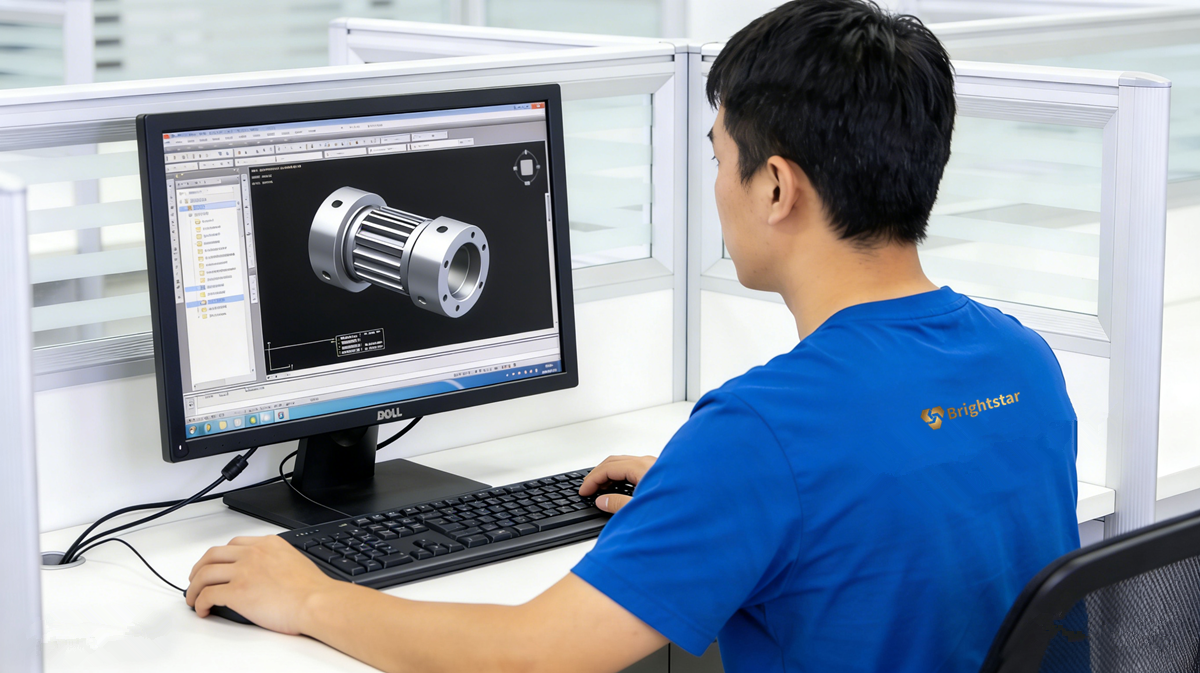
 From Prototyping To Production
Our CNC machining Services

2015
ISO 9001 CERTIFIED
100+
CNC machines
10K+
CNC machined parts/ month
100+
Plastic & metal materials
Advantages of CNC machining services

1.Material authenticity of CNC machining: In CNC machining, any material specified by the customer, such as aluminum, steel, alloy steel, plastic, etc., can be used to achieve material diversity. CNC machining starts with a piece of solid raw material, and removes material through cutting, milling or other mechanical processing methods to finally form the desired part. This method maintains the original characteristics of the material, because the processing process only removes excess material without changing the properties of the remaining material. Customers can choose materials with specific grades (i.e. specific models and specifications) with known mechanical properties and chemical composition, which keep the material natural, real, 100% of the raw material characteristics from before to after processing. Unlike CNC prototype machining, 3D printing and prototyping can only use specific materials, such as plastic filaments, powders (metal or plastic) or photosensitive resins, which must be able to melt or solidify to form each layer. Especially those grades of materials that are not specially designed for 3D printing, which means that 3D printing cannot use those materials with specific mechanical properties and chemical composition.
2. Low cost: For certain types of parts, CNC machining is a high-speed manufacturing process. A CNC machine equipped with a powerful spindle and good machine tooling can remove raw material quickly. If the part geometry is simple (for example, a solid base plate that requires holes, threads, steps, or slots), very little raw material is removed. In this case, the unit price of CNC machining will be much lower than 3D printing, because printing such a part will cost many hours
3. High precision: CNC machines can process parts very accurately according to the design drawings, and the error range is usually within a few microns. On a good CNC milling machine or CNC lathe machine, the machine tolerance can reach ±0.005 mm. If we can remove 0.005 mm in the final cutting of the workpiece, it means that we can easily get parts with a tolerance within ±0.01 mm. In contrast, the 3D printing process prints parts layer by layer, with a minimum layer height of 0.05 mm, which means that the tolerance of the part cannot be less than 0.05 mm.
4. Better surface quality: CNC machining can provide a better surface finish, sometimes even eliminating the polishing step. When the CNC milling machine reaches 15,000 rpm and the lathe reaches 6,000 rpm, the surface roughness of CNC machined parts is less than Ra 0.8, which is good for surfaces that can be bead blasted, painted or anodized without manual grinding. Meanwhile, parts manufactured by selective laser sintering (SLS), selective laser melting (SLM) or direct metal laser sintering (DMLS) processes have a surface roughness much greater than Ra 3.2.
5.More flexible part size: Large CNC machining centers can have a 6m x 3m or larger table, which means that very large parts can be milled. As far as we know, the largest lathe can reach a diameter of 5 meters. At the other end, with a precise 5 axis CNC milling machine and a cutting tool with a diameter of 0.05mm, we can mill tiny geometries from a small piece of material of 1mm x 1mm x 1mm.
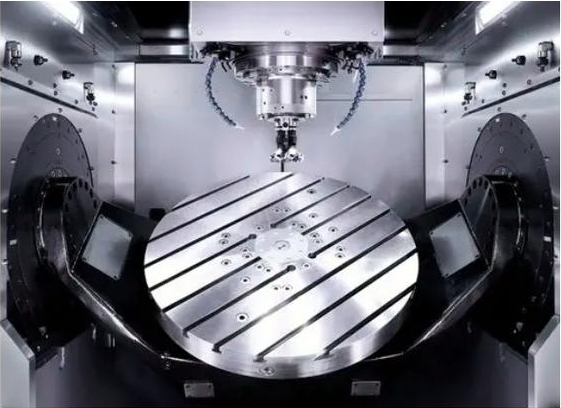
6. Complexity: CNC machines can process complex geometric prototypes and parts, including those that are difficult to achieve with traditional manual processing, and can process complex contours and 3D shapes, such as non-linear curves, free-form surfaces, etc. They can easily process complex internal features, such as oblique holes, irregularly shaped holes, and internal threads. Modern CNC machines can perform 5 axis or even more-axis processing, making it possible to process complex 3D shapes.
Brightstar CNC machining Capabilites


Why cooperate with Brightstar's in CNC machining services?
2000 global happy customers, Over 50K projects delivered, 100% full inspection before shipment.
More than 100 types of manufacturable materials, and 60+ surface treatment options
CNC affordable price, save 30% - 50% on your cost
Providing quickly customize solutions, from DFM to prototyping and production.Whether it’s complex or precision parts, Brightstar meets your exact requirements.
Machining completed in 3 days, global express delivery in 3-4 days
Brightstar offers one-stop services, including DFM, custom manufacturing, and surface finishing,for comprehensive rapid prototyping solutions.
Application of CNC machined parts
Gallery of our CNC Machined Parts

Process: CNC turning+ milling
Material: stainless steel 316
Tolerances: ⌖0.05mm
Finishes: As machined (Ra0.8μm/1.6μm)

automation-cnc-turning--stainless-steel-joint--rod
Process: CNC turning
Material: stainless steel
Tolerances:◎ 0.05mm;
Finishes: Bead blasted, Clear anodized

automation-machine-aluminum-cnc-machining-cooling-plate
Process: CNC milling
Material: aluminum alloy
Tolerances: //0.2; ⌖0.05mm
Finishes: Bead blasted, Clear anodized

5-Axises-CNC-Machining-Metal-Precise-and-Complex-Prototypes
Process: CNC milling
Material: aluminum alloy
Tolerances: ISO 2768-m
Finishes: As machined 1.6μm

cnc-turning-aluminum-part-motor-front-cover
Process: CNC turning + milling
Material: aluminum 6061
Tolerances: ISO 2768-m
Finishes: Bead blasted, Clear anodized

Custom-Cnc-Mechanical-Aluminum-Plate
Process: CNC milling
Material: Aluminum 5083
Tolerances: ISO 2768-F
Finishes: Polishing

custom-non-standard-stainless-steel-cnc-parts-precision-shaft
Process: CNC turning + milling
Material: stainless steel 304
Tolerances: H6(0.016mm); h6(0.025mm); G5(0.018mm); ⌖(∅0.2mm)
Finishes: As machined Ra0.8μm

high-persion-aluminum-cnc-machining-medical-parts
Process: CNC milling
Material: aluminum 7075
Tolerances: ISO 2768-F, ▱ 0.1mm
Finishes: Polishing
CNC Machining Materials
Understanding the material characteristics and processing requirements is crucial to CNC machine. In the field of metal CNC machining and plastic CNC machining, Brightstar's prototypes, custom metal parts and CNC plastic machining parts commonly used materials include various types of metal, plastics and composite materials. The following are some common CNC machining materials and Its characteristics:
Metal materials include steel vs aluminum, inox steel, copper, iron, aluminum alloy, copper alloy, tungsten etc.
Machinable plastics include delrin material(POM-H), ABS, nylon, polycarbonate (PC), polyoxymethylene (POM), polymethyl methacrylate (PMMA), etc., as well as polyethylene (PE), UHMW, polypropylene (PP), polyetherketone (PEEK), polyethylene terephthalate(PET), PBT, polyphenylene sulfide (PPS), polyetheretherketone (PEEK), polyvinyl chloride (PVC), Acrylic, PA (Nylon), PU, Teflon,PS, ... and other materials
Other special materials: such as carbon fiber reinforced materials, glass fiber reinforced materials, ceramics, etc.
If you need to know more about material properties or want to know more about processable materials, please contact us ann@brightrapid.com


Common Surface Finishing at Brightstar
| Name | Description | ||
|---|---|---|---|
|
Anodizing | Anodizing is an electrolytic process for treating aluminum and its alloys. It forms an oxide film on the metal surface to enhance hardness, corrosion resistance, wear resistance, and appearance. There are three main types: |
|

|
Sand Blasting | Sandblasting is the process of using abrasive particles ejected at high pressure and at high speed to remove the oxide layer, rust or old coating on the surface, making the rough surface smooth and improving the adhesion of subsequent coatings. |
|
|
Powder Coating | Powder Coating is an electrostatic spraying technology that charges the powder coating and adsorbs it on the surface of the object. After high-temperature baking, the powder melts and fixes on the object. Generally, the thickness of powder spraying should be between 20-150μm. For specific industries, such as automotive painting, the coating thickness is usually required to be between 50-120 microns. |
|
|
Painting | Painting involves spraying liquid paint onto an object’s surface to form a smooth coating. It provides protection, decoration, and special functions like UV resistance, EMI shielding, insulation, and high-temperature resistance. We use Pantone and RAL systems for color matching and two-color/multi-color techniques for gradient and layered effects. The final coating can mimic 2K molding and offer finishes like matte, flat, semi-gloss, glossy, or satin. |
|

|
Electroplating | Electroplating is a process that uses the principle of electrolysis to plate a thin layer of other metals or alloys on the metal surface, such as nickel, chromium (chroming), zinc (Galvanizing), silver, rose gold, etc. It uses electrolysis to attach a metal film to the surface of metal or other materials to prevent metal oxidation (such as rust), improve wear resistance, conductivity, reflectivity and corrosion resistance (copper sulfate, etc.), and enhance aesthetics. |
|
|
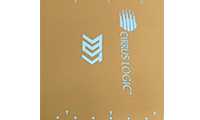
Silk printing | Silk printing, Silk screen printing, full name screen printing, screen printing is a printing technique that uses a mesh-like screen to transfer ink to the surface of various materials. This technique can be applied to a variety of materials, including but not limited to fabric, paper, glass, wood, plastic and metal. Due to its unique texture and visual effects, screen printing is still very important in the field of modern printing and design. |
|
|
Grinding | Grinding is a common surface treatment process. Its purpose is to remove irregularities, burrs, rust or other defects on the surface of the material by physical or chemical means to make the surface smoother, flatter and cleaner. It is usually done by hand using tools such as sandpaper, grinding wheels and sanding belts, and by mechanical grinding using a grinder machine. Sanded to a surface finish of Ra 0.8 μm with 600 grit sandpaper; Sanded to a surface finish of Ra 0.4 μm with 1000 grit sandpaper; |
|
|
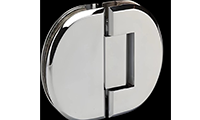
Polishing | Polishing is a processing method that uses abrasive particles or other polishing media and flexible polishing tools to remove fine scratches and flaws on the surface of the workpiece, reduce the surface roughness of the workpiece, and obtain a bright and smooth surface or a mirror-like gloss.The surface finish of mirror polishing and clear polishing can generally reach Ra 0.1-0.05 μm. |
|
|
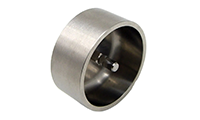
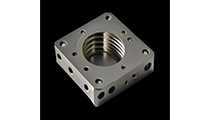
Passivation | Passivation is a process that uses strong oxidants or electrochemical methods to cause an oxidation reaction on the metal surface, remove iron ions on the surface, form a dense passivation film, and thus improve the corrosion resistance of parts. |
|
|
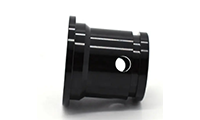
Blackening | Blackening is also a chemical oxidation treatment process for metal surfaces. Blackening is carried out at a lower temperature, usually between 130°C and 150°C, to form a black oxide film. This process is more commonly used in ordinary mechanical parts because of its relatively low cost and short processing time. |
|
|
Bead blasting | Bead blasting is a surface treatment process using high-pressure beads (glass, ceramic, or metal) to clean or change surface texture. It’s gentler than sandblasting and creates a uniform matte finish. Glass beads range from #80 to #220. Larger beads (#80) remove thick coatings, while smaller beads (#220) are for fine polishing. |
Quote Now to Start Your CNC Machining Project
CNC machining tolerances

|
International Marking |
Rz | Ra | Surface Shape Characteristics | Processing Methods | |
| N12 | 200 | 50 | Rough surface | Clearly visible tool marks | Sawing, rough turning, rough milling, rough planing, drilling and processing with coarse files, coarse grinding wheels, etc. |
| N11 | 100 | 25 | Visible tool marks | ||
| N10 | 50 | 12.5 | Slight tool marks | ||
| N9 | 25 | 6.3 | Semi-glossy surface | Visible tool marks | Cold drawing, fine turning, fine reaming, rough reaming, rough grinding, scraping, rough broaching, polishing, etc. |
| N8 | 12.5 | 3.2 | Slight tool marks | ||
| N7 | 6.3 | 1.6 | No visible tool marks | ||
| N6 | 6.3 | 0.8 | Smooth-surface | Identifiable tool mark direction | Grinding, diamond turning tool finishing, fine reaming, cold drawing, broaching, polishing, etc. |
| N5 | 3.2 | 0.4 | Micro-identify the direction of tool marks | ||
| N4 | 1.6 | 0.2 | Unrecognizable direction of machining marks | ||
| N3 | 0.8 | 0.1 | High gloss surface | Matt gloss finish | Grinding, polishing, fine grinding, super fine grinding, mirror grinding, etc. |
| N2 | 0.4 | 0.05 | Bright glossy surface | ||
| N1 | 0.2 | 0.025 | Mirror surface | ||
| 0.1 | 0.012 | Mist mirror surface | |||
| 0.05 | Mirror surface | ||||
Following the below steps to get CNC prototypes or machined parts


Tips for CNC Machined Part Design
CNC machining FAQ
When machining polypropylene, it's crucial to use non-aromatic, water-soluble coolants for the best surface finish and dimensional accuracy. Polypropylene's semi-crystalline structure allows for close-tolerance machining, making it ideal for precision parts
When choosing a custom aluminum fabrication shop, factors such as its background in the relevant industry, technical capabilities, quality control measures, material selection, customization and design support, cost and delivery time should be considered.
The key technical elements to achieve zero tolerance machining include the use of high-precision CNC (computer numerical control) equipment to ensure the accuracy and repeatability of the machining process, strict environmental control to maintain the consistency of material dimensions, the use of high-precision measurement tools such as coordinate measuring machines (CMMs) and optical comparators for precise dimensional verification, and the use of custom-designed cutting tools, which are usually made of superhard materials such as diamond or cubic boron nitride to improve cutting accuracy and tool life. These elements work together to achieve near-zero tolerance machining accuracy to meet the extreme requirements for part size and geometric accuracy in the high-end manufacturing field.
In CNC machining, custom aluminum parts, choosing the right aluminum alloy heat treatment state is crucial to ensure machining efficiency and part performance. For 6061 aluminum alloy, the T6 heat treatment state is generally considered to be the most suitable for machining. For aluminium CNC machining applications that require high strength, high precision, and fine surface treatment, 6061 T6 aluminium is a very ideal choice. It is widely used in the manufacture of parts in the fields of aerospace, automobile, shipbuilding, construction, and more
Counter sinks and chamfers are very similar, with chamfers typically being 45 degrees (although the angle can vary), and counter sinks typically being available in a variety of standard angle sizes, the most common being 82°, 90°, or 100°. In the case of a 90° counter sink, this designation is the same as a 45° chamfer, as the countersink angle takes into account both sides, so it is twice the angle of the chamfer.
The machinability of 18 8 stainless steel is relatively high, but compared to some other metal materials, it has a more pronounced trend of work hardening, which means that the material becomes harder during the machining process, thereby increasing the risk of tool wear. It is recommended to use sharp tools made of cemented carbide or coated high-speed steel (HSS). Due to its low thermal conductivity, heat accumulation may become a problem, so the use of appropriate coolants and lubricants is necessary. 18 8 stainless steel is a food-grade material, commonly used in the food processing and pharmaceutical industries because it does not exude chemical substances and is considered safe and non-toxic.
In CNC machining, in order to improve the performing manufacturing operations on lines, we adopt lean production techniques, introduce advanced machining equipment, optimize production layout, implement preventive maintenance, reduce machine downtime, continuous employee training, and adopt real-time data monitoring and analysis. These methods help reduce waste, increase the speed and flexibility of the production process, and thus improve overall production efficiency. A 50% increase in productivity, a 30% reduction in costs, and a 60% reduction in delivery time have been achieved.
Expand your search to find CNC manufacturers further away who may offer better quality, price or service.
Brightstar is a CNC machining China, Brightstar provides milled or lathe CNC parts at competitive prices in as fast as 3 days, and through international logistics, it can reach you in about 3-4 days, or even faster.
Brightstar has passed the ISO9001:2015 quality system standard and adopts strict quality control processes, including raw material inspection, in-process inspection and finished product inspection, and provides relevant test reports according to customer requirements.
The delivery time depends on the complexity of the part and the processing volume. Brightstar will provide an estimated delivery time when quoting. CNC machining is usually 3-20 days, and large quantities or complex structural parts are a little longer.
Usually, a preliminary quote can be provided within 1-3 business days after receiving complete information, and as fast as 2 hours, depending on the quotation quantity.
As a contract manufacturer, we don't design products, but we can provide manufacturability (DFM) guidance to help you optimize the design and reduce costs while maintaining product functionality.
With the progress of globalization, many companies are seeking global machining solutions to reduce costs and improve production efficiency. If you also want to reduce costs, you might as well take a look at Brightstar, a rapid manufacturing company located in Dongguan, a famous manufacturing city in China, with a large machining shops equips over 100 sets CNC machines, although we may not be geographically close to you, we offer quick turnaround delivery, with CNC parts in just 3 days, at competitive prices.
Detailed drawings of the part, material specifications, processing requirements, quantity and other information are required.
Brightstar provides CNC fabrication prototype services including but not limited to milling, turning, drilling, tapping, grinding and wire cutting in a wide range of materials including metal stainless fabrication, aluminum alloys, titanium, plastics, and composites, offering precision and quality to meet the diverse needs of industries such as aerospace, automotive, medical, and consumer electronics.
Brightstar's CNC machining capabilities include high-precision machining, complex shape manufacturing, multi-axis machining, etc.
The machining price of CNC parts is influenced by material costs, complexity, processing time, and quantity. For an exact quote on CNC machining, contact a service provider for a detailed estimate based on your specific requirements.
Brightstar's machine tool travel sizes range from small machines to large machines in our precision machine shop. Please consult Brightstar's technicians for specific sizes.
Surface finish depends on the processing method and material, and can usually reach Ra0.2 to Ra3.2 microns.
.png)