Key Insights Before Ordering CNC Milling Services

In today's highly competitive manufacturing environment, precision and efficiency are more critical than ever. CNC (Computer Numerical Control) milling has become the cornerstone of modern prototyping, low-volume production, and high-precision component manufacturing. For engineers, procurement managers, and product designers, understanding CNC milling before placing an order is essential to ensure quality, control costs, and achieve timely delivery. At Brightstar Prototype CNC Co., Ltd, we specialize in precision CNC machining, offering comprehensive expertise in 3/4/5-axis milling, complex part production, and rapid prototyping. This guide will provide the critical insights needed to make informed decisions when ordering CNC milling services.
Understanding CNC Milling
CNC milling is a computer-controlled process that removes material from a workpiece using rotating cutting tools. Unlike traditional milling, CNC milling offers unmatched precision, repeatability, and scalability. By integrating computer programming (G-code) with high-speed machinery, manufacturers can produce intricate geometries, tight tolerances, and high-quality finishes consistently.
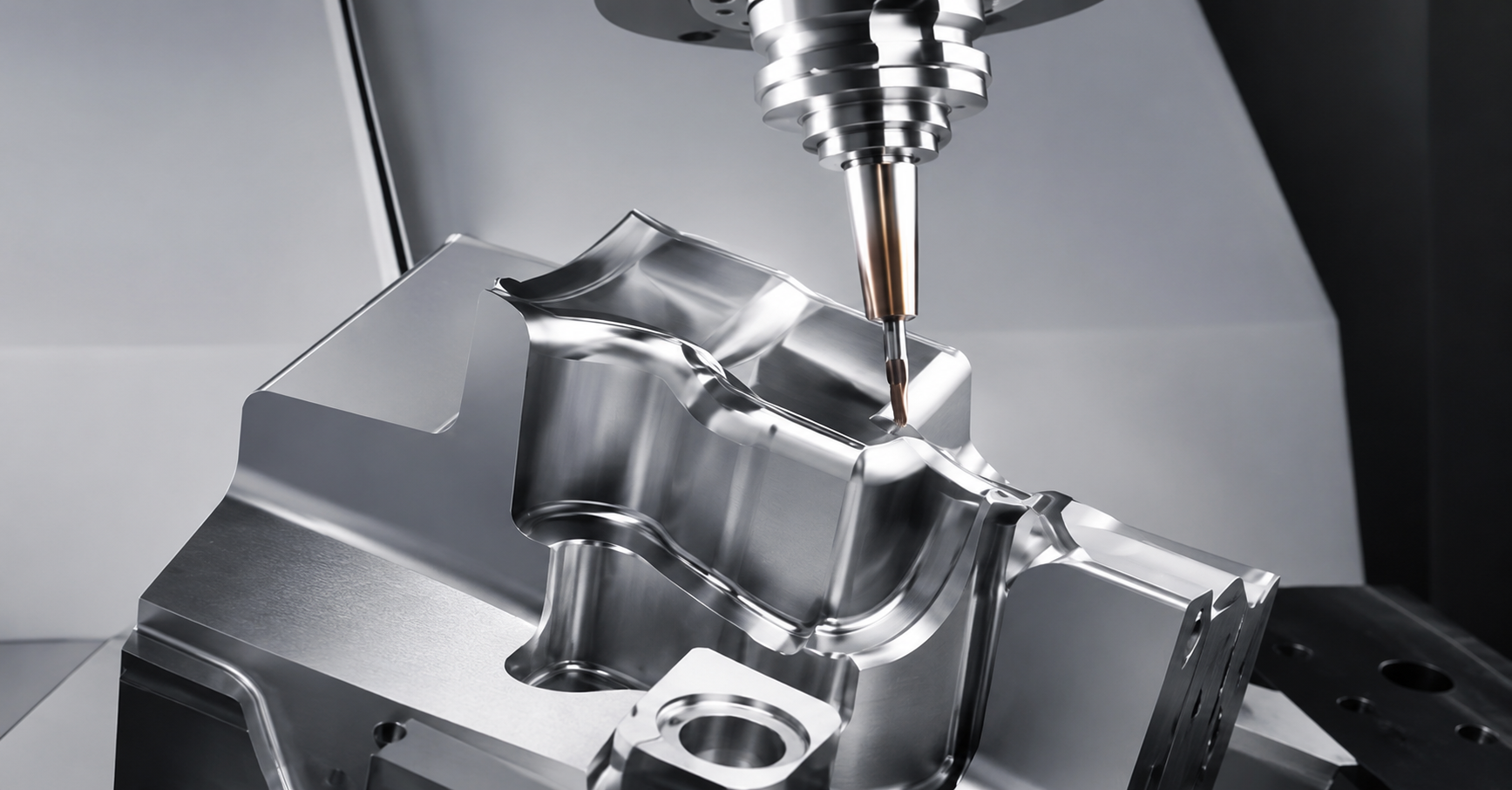

For businesses and engineers, knowing the capabilities of CNC milling helps avoid costly mistakes. CNC machines range from simple 3-axis mills to advanced 5-axis CNC machining centers, enabling production of components with complex undercuts, angled surfaces, and detailed features that would be impossible to achieve manually.
Key terminology to know:
CNC Mill / CNC Machining: Refers to the overall process of material removal using CNC technology.
CNC Lathe: While similar in concept, lathes rotate the workpiece instead of the cutting tool and are better for symmetrical components.
5 Axis CNC: Machines with five simultaneous axes allow complex multi-surface machining in a single setup.
Precision CNC Machining: Focuses on high tolerances (often ±0.005 mm), critical for aerospace, medical, and automotive parts.
Understanding these terms ensures effective communication with suppliers and avoids misunderstandings about capability, pricing, and lead time.
Choosing the Right CNC Process
Not every part requires the same type of machining. Choosing between a CNC mill, lathe, or 5-axis machining depends on your design and functional requirements.
3-Axis CNC Milling: Ideal for flat or simple contoured surfaces. Most economical and widely available.
4-Axis CNC Milling: Adds a rotary axis for more complex profiles, such as gear-like structures or circular cuts.
5-Axis CNC Milling: Allows simultaneous movement along five axes, enabling intricate shapes, angled surfaces, and undercuts without multiple setups. This reduces potential errors and speeds up production.
At Brightstar, our portfolio includes 3/4/5-axis CNC machining services, enabling clients to produce everything from simple prototypes to highly complex components, including aerospace and medical-grade parts.
Factors That Influence CNC Machining Costs
Several factors affect the price of CNC machining:
Complexity of the Part: Features like deep pockets, thin walls, and sharp corners increase setup and machining time.
Tolerances: Tighter tolerances require slower feed rates, precision tooling, and additional quality inspections.
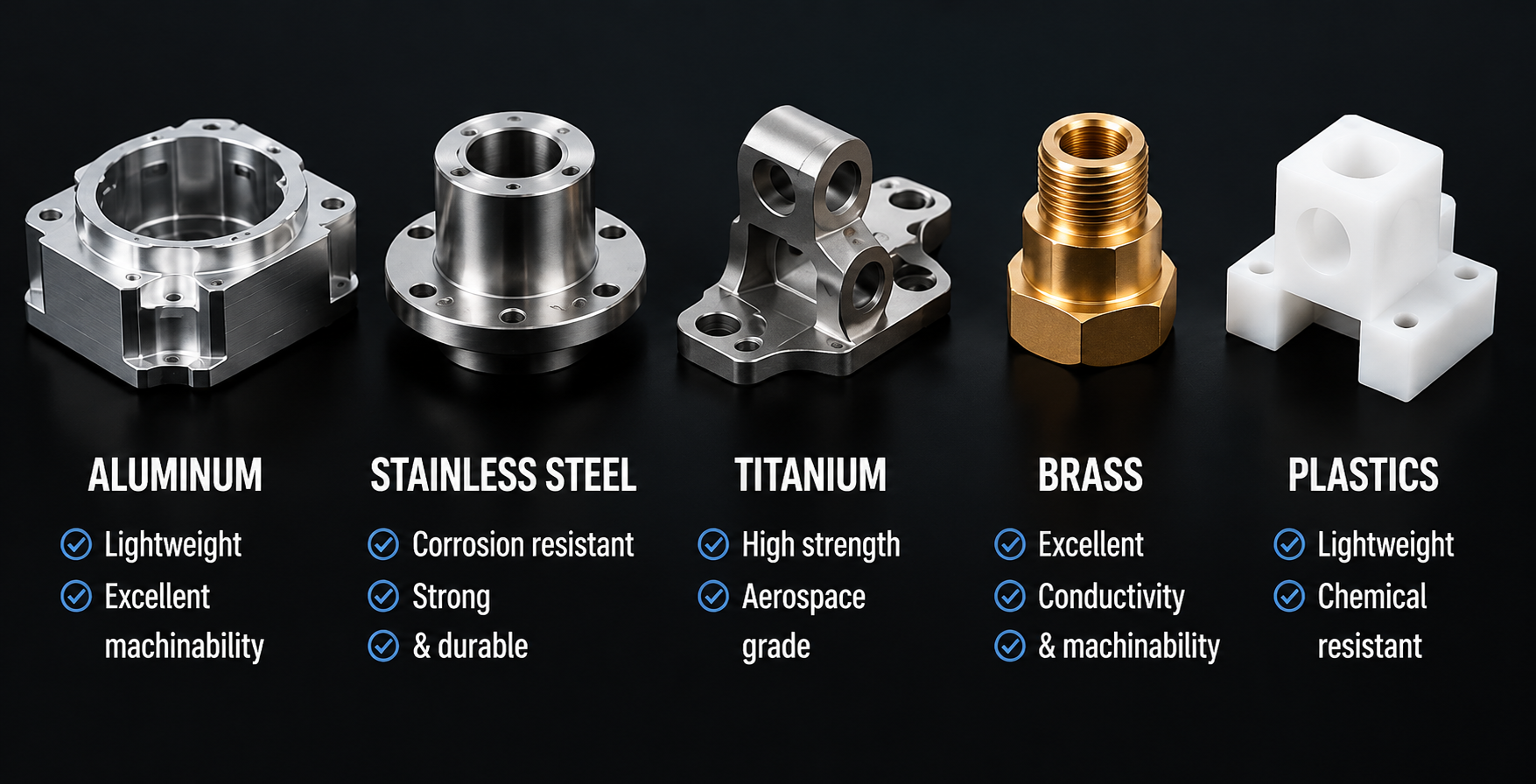
Material: Aluminum, stainless steel, titanium, and plastics each have different machining characteristics and tooling requirements.
Quantity: While CNC excels in low-volume precision, larger batch sizes can reduce unit costs through efficient programming and optimized toolpaths.
Surface Finish & Post-Processing: Polishing, anodizing, or heat treatment can add to production time and cost.
By assessing these variables before ordering, customers can avoid surprises and select a supplier that aligns with their budget, schedule, and quality expectations.
Material Selection for CNC Milling
Choosing the right material is critical to part performance and machinability. Common materials include:
Aluminum CNC Machining: Lightweight, corrosion-resistant, easy to machine, ideal for aerospace, automotive, and prototypes.
Stainless Steel CNC Machining: Strong, wear-resistant, used in medical, food, and structural applications.
Titanium CNC Milling: Exceptional strength-to-weight ratio, used in aerospace and medical implants.
Plastics & Composites: Materials like POM, ABS, and PC are suitable for low-weight components or prototypes.
Each material affects tool wear, cutting speeds, and cost. At Brightstar, we provide guidance to select the optimal material for your design requirements and intended application.
Design for Manufacturability (DFM) and Cost Optimization
DFM principles help reduce manufacturing complexity and costs while maintaining quality:
Wall Thickness: Maintain a minimum recommended thickness to avoid deformation during machining.
Fillets and Radii: Replace sharp internal corners with radii to reduce tool stress and improve surface finish.
Tool Accessibility: Ensure features are accessible to the cutting tool without multiple setups.
Batch vs. Prototype Considerations: DFM also considers tooling efficiency for larger batch production versus single prototype machining.
By collaborating with a precision CNC machining partner, clients can implement DFM strategies early in the design phase, reducing rework, minimizing scrap, and accelerating delivery.
The CNC Milling Workflow: What Happens After You Send a Drawing?
Many buyers assume CNC machining starts when the machine begins cutting metal. In reality, successful CNC milling services rely on a complete workflow that begins long before production.
Understanding this process helps customers communicate more effectively with a CNC machine shop and anticipate lead times, pricing, and technical challenges.
1. RFQ and Technical Review
The process begins with an RFQ (Request for Quotation). At this stage, the supplier evaluates:
2D drawings or 3D CAD files
Material requirements
Surface finish requirements
Tolerance specifications
Quantity and delivery expectations
Secondary processes such as anodizing or heat treatment
This is where many cost-saving opportunities appear.
A professional CNC machining company does not simply quote a drawing. Instead, engineers analyze manufacturability and identify potential risks before machining begins, ensuring the quoted process is practical, efficient, and repeatable.
2. CAM Programming and Toolpath Development
Once the project is approved, the next stage is CAM programming.
CAM software converts CAD geometry into machine-readable toolpaths.
This stage determines:
Cutting strategy
Tool selection
Step-over and step-down values
Feed rates and spindle speeds
Collision avoidance
Machining sequence
For complex CNC machining, programming quality often determines final part quality.
A poor toolpath can cause:
Excessive tool wear
Surface chatter
Dimensional deviation
Long machining time
Higher machining cost
This is especially critical in 5 axis CNC machining, where tool orientation and simultaneous movement require advanced programming experience.
An experienced supplier will optimize the machining strategy before production rather than relying on trial-and-error on the machine.
3-Axis vs 5-Axis CNC Machining: Which One Do You Really Need?
One of the most common questions buyers ask is:
Should I choose 3-axis or 5-axis machining?
The answer depends on geometry, tolerance, and production goals.
3-Axis CNC Milling
Best for:
Flat surfaces
Simple pockets
Conventional brackets
Standard mechanical parts
Advantages:
Lower machine cost
Faster setup
Competitive pricing
Suitable for most standard components
However, limitations appear when the part contains:
Angled surfaces
Undercuts
Deep cavities
Multi-face precision features
These designs often require several setups, increasing risk and labor.
5-Axis CNC Milling
Best for:
Aerospace parts
Medical components
Precision housings
Automation assemblies
Complex aluminum parts
Advantages include:
Single-setup machining
Better positional accuracy
Reduced fixture changes
Improved surface quality
Shorter total lead time
For 5 axis cnc machining services, the goal is not simply "more advanced equipment."
The real benefit is reducing accumulated error.
Each additional setup introduces positioning variation.
By machining multiple faces in one operation, 5-axis CNC improves consistency while reducing inspection and handling time.
This is why industries such as aerospace CNC machining and medical CNC machining increasingly rely on multi-axis manufacturing.
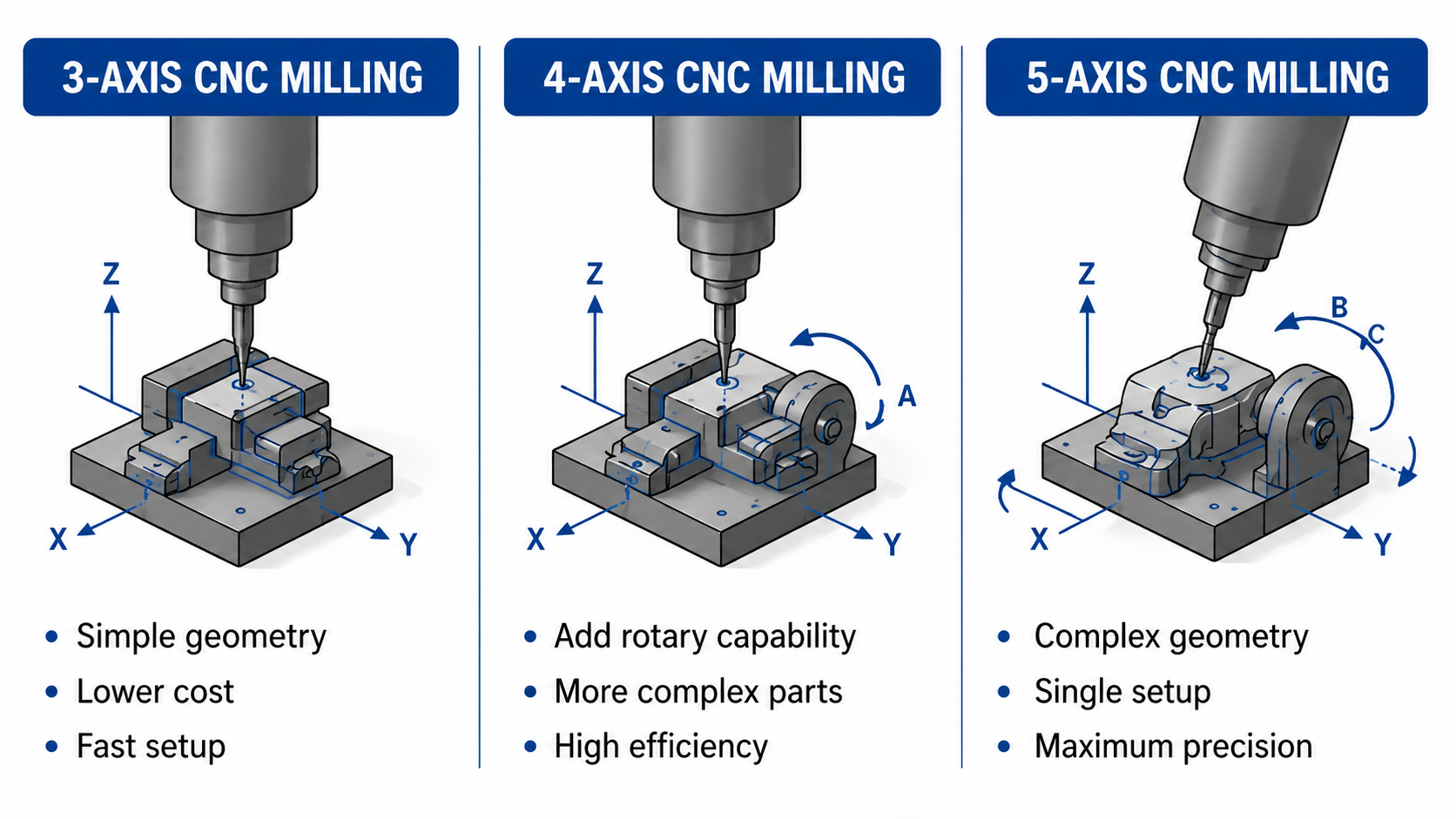

At Brightstar, many of our complex milling parts are produced using 5-axis machining centers, particularly for customers requiring tight geometric tolerances and multi-surface precision.
Tolerance Expectations: How Precise Is CNC Milling?
Precision is one of the biggest reasons companies choose CNC machining.
But many procurement teams misunderstand tolerances.
Not every feature requires ultra-tight accuracy.
Typical CNC milling tolerances include:
| Requirement | Typical Range |
|---|---|
| Standard machining | ±0.05-0.10 mm |
| Precision machining | ±0.01-0.02 mm |
| High precision CNC | ±0.005 mm or tighter |
Tighter tolerances require:
Higher machine rigidity
Stable fixturing
Tool compensation
Temperature control
Additional inspection time
This directly affects CNC machining price.
A common engineering mistake is applying extremely tight tolerances to non-functional features.
For example: A housing may require ±0.01 mm on a bearing bore but not necessarily on external cosmetic surfaces.
Over-tolerancing increases:
Machining time
Inspection workload
Scrap risk
Overall cost
This is why engineering communication matters.
Surface Finish Matters More Than Many Buyers Expect
Another critical factor is surface finish.
Customers often specify Ra values without fully understanding their manufacturing implications.
Surface finish depends on:
Material
Tool condition
Toolpath strategy
Cutting parameters
Machine rigidity
Typical requirements include:
| Surface Finish | Application |
|---|---|
| Ra 3.2 | General machining |
| Ra 1.6 | Functional surfaces |
| Ra 0.8 | Precision components |
| Ra 0.4 or finer | Optical or sealing surfaces |
As roughness requirements become tighter, machining becomes slower and more expensive.
For example: A part requiring Ra0.2 usually demands:
Fine finishing tools
Reduced feed rates
Additional polishing or finishing passes
Many customers are surprised that surface finish may affect cost more than dimensional tolerance.
Professional suppliers explain these trade-offs during quotation rather than after production begins.
Common Mistakes When Ordering CNC Machining Services
After years in precision CNC machining, we see recurring issues that create delays and unnecessary cost.
1. Overcomplicated Geometry
Designs sometimes include:
Deep narrow cavities
Sharp internal corners
Thin unsupported walls
These features may be theoretically possible but expensive and unstable to machine.
Design simplification often produces better results.
2. Unrealistic Lead Time Expectations
Rapid delivery is achievable.
However, lead time depends on:
Material availability
Machine scheduling
Secondary processing
Inspection requirements
A reliable CNC machining supplier provides realistic delivery plans rather than promising impossible timelines.
Brightstar supports rapid prototyping and urgent projects, but we prioritize achievable schedules and quality stability.
3. Choosing Suppliers Based Only on Price
This is perhaps the biggest mistake.
Low-cost quotes may hide risks such as:
Inexperienced programming
Limited inspection capability
Poor fixture design
Unstable quality systems
The cheapest supplier often becomes the most expensive after:
Delays
Rework
Scrap
Failed assemblies
Professional procurement evaluates total manufacturing value, not only unit price.
How to Choose a Reliable CNC Machining Supplier
Finding the right supplier is often more important than finding the lowest price.
The global market contains thousands of CNC manufacturing shops and CNC machining suppliers, but capability levels vary significantly.
Before placing an order, buyers should evaluate suppliers based on several critical factors.
Engineering Capability
A reliable supplier should do more than operate machines.
Look for companies that provide:
DFM feedback
Process recommendations
Material guidance
Machining risk analysis
Technical communication
A professional CNC precision machining manufacturer acts as an engineering partner, not simply a production vendor.
If a supplier accepts every drawing without discussion, this may indicate limited engineering involvement.
Strong suppliers ask questions.
They challenge assumptions.
They identify potential manufacturing risks before production starts.
Equipment and Machining Capacity
Machine capability directly affects part complexity and delivery reliability.
Ask suppliers about:
3-axis capability
4-axis capability
5 axis cnc machining center availability
Maximum machining size
Material experience
Production capacity
Many suppliers advertise 5 axis CNC machining, but actual capability depends on:
Machine accuracy
CAM programming
Fixture design
Operator experience
At Brightstar, we operate 70+ CNC machines, including 3/4/5-axis machining centers, allowing us to support:
Prototype machining
Low-volume production
Medium batch manufacturing
Complex precision milling projects
This capacity provides scheduling flexibility and reduces production bottlenecks.
Quality Control and Inspection Capability
Quality should never depend on luck.
Reliable precision CNC machining services require structured inspection systems.
Ask suppliers about:
CMM inspection
FAI reports
In-process inspection
Material traceability
Final quality reports
Inspection becomes particularly important for:
Aerospace parts
Medical components
Precision assemblies
Tight-tolerance machining
A supplier without advanced measurement capability may struggle to validate precision requirements.
Brightstar implements full-process QC, supported by automatic CMM inspection, ensuring dimensional consistency and traceable quality documentation.
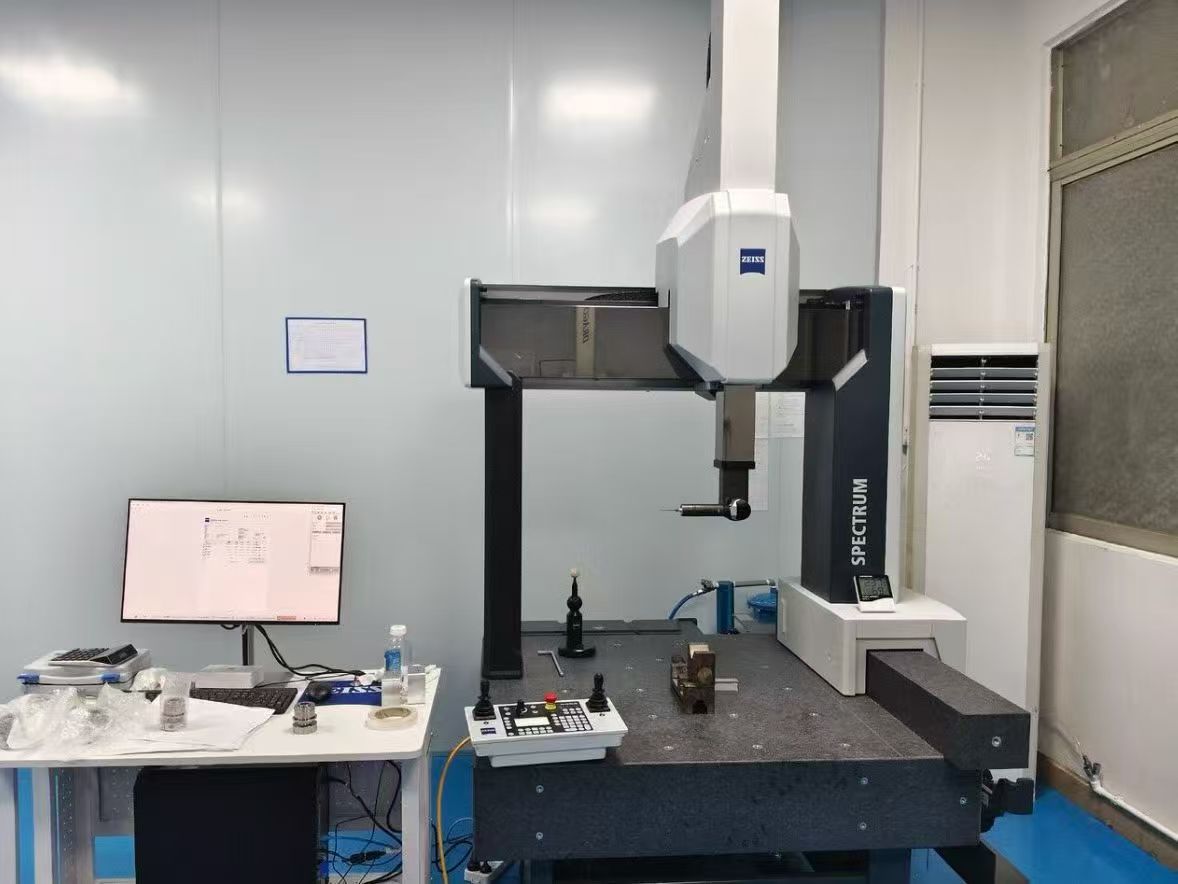

For high-precision projects, measurement capability is often as important as machining capability.
Why many global buyers search for:
cnc machining china
china cnc milling service
cnc machining service china
precision cnc machining china
The reason is straightforward.
China combines:
Mature supply chains
Advanced manufacturing infrastructure
Competitive cost structures
Skilled machining talent
Fast material sourcing
However, capability varies considerably.
Not all China CNC machining companies deliver the same standards.
Successful outsourcing depends on selecting suppliers with:
Strong engineering teams
Stable process control
Proven machining experience
Reliable communication
Why Brightstar Focuses on Precision Milling and Complex Parts
At Brightstar Prototype CNC Co., Ltd, our philosophy is simple:
Precision machining is not only about making parts—it is about solving manufacturing challenges.
We focus primarily on:
Precision Milling
Our strength lies in:
Complex milling parts
Multi-surface machining
Tight tolerance components
Aluminum and stainless-steel machining
Automation assemblies
Precision housings
While many machine shops offer broad services, Brightstar concentrates on areas where engineering and machining expertise create the greatest value.

3/4/5-Axis CNC Machining
Our manufacturing capability includes:
3-axis CNC machining
4-axis machining
5 axis cnc machining services
This enables efficient production of:
Prototype parts
Low-volume production
Complex geometries
High-precision assemblies
Many customer projects involve components requiring:
Multi-face machining
Positional accuracy
Cosmetic quality
Repeatable tolerances
Our machining strategy is designed to support these requirements consistently.
Rapid Prototyping and Production Flexibility
Product development rarely follows a straight path.
Design revisions happen.
Timelines change.
Engineering requirements evolve.
This is why rapid prototyping matters.
Brightstar supports:
Prototype machining
Engineering samples
Pilot production
Batch manufacturing
Fast iteration helps customers validate designs earlier and reduce project risk.
For many buyers, flexibility becomes just as valuable as machining accuracy.
Frequently Asked Questions About CNC Milling Services
What is CNC milling?
CNC milling is a computer-controlled machining process that removes material using rotating cutting tools to create precise parts and geometries.
What is the difference between CNC milling and CNC turning?
CNC milling rotates the cutting tool while the workpiece remains fixed.
CNC turning rotates the workpiece and is better suited for cylindrical or rotational components.
Is 5-axis machining always necessary?
No. 5 axis cnc machining is best for complex geometries, angled surfaces, and multi-face precision.
Many standard components can be produced more economically using 3-axis machining.
What affects CNC machining cost most?
Key cost drivers include:
Geometry complexity
Material selection
Tolerance requirements
Surface finish
Quantity
Secondary processing
How precise can CNC milling be?
Typical precision CNC machining reaches:
±0.01 mm
±0.005 mm or tighter depending on design and inspection requirements.
Final Thoughts
Ordering CNC milling services should never be treated as a simple purchasing transaction.
Successful projects result from collaboration between engineering design and manufacturing expertise.
Understanding:
CNC process selection
Material behavior
DFM principles
Tolerance strategy
Supplier capability
helps reduce cost, shorten lead time, and improve final product quality.
Whether you require prototype machining, precision milling, or complex 5-axis CNC components, choosing the right machining partner makes all the difference.
At Brightstar Prototype CNC Co., Ltd, we combine engineering insight, 3/4/5-axis machining capability, and full-process quality control to support customers developing precision components across automation, electronics, medical, aerospace, and industrial sectors.
Have a drawing or RFQ under development?
Our engineering team is ready to review your project and provide machining recommendations, DFM feedback, and competitive quotation support.