
Precision CNC Machining Case for Robot Joint Components

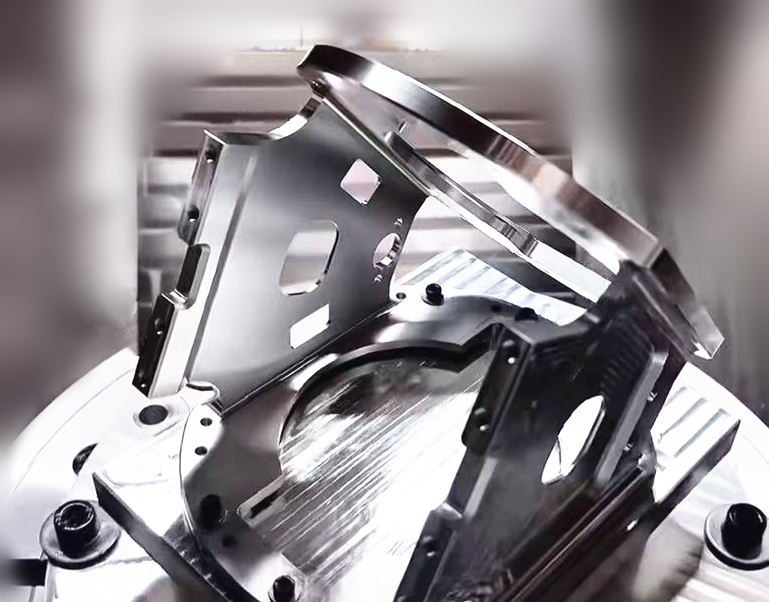
Project Overview
|
Industry |
Industrial Robotics |
|
Product Name |
Custom Robot Joint Components (Drive Joint) |
|
Machining Material |
6061-T6 Aluminum Alloy |
|
Machining Process |
5-Axis CNC Machining |
|
Production Type |
Small-Batch, High-Precision Production |
|
Surface Roughness |
As-Machined Surface (Ra ≤ 0.8μm) |
|
Delivery Cycle |
8 Working Days (Excluding Shipping Time) |
|
Product Function |
In industrial robots, joint components are core load-bearing transmission parts integrating transmission systems, bearings, and actuator systems. Their dimensional accuracy, concentricity, and structural integrity directly affect the robot's motion flexibility, load capacity, and stability during high-intensity continuous operation. |
About the Client
Nova Robotics Lab is a university-led R&D team focusing on the innovation of core components for industrial robots. Operating in a simulated engineering enterprise model, the team is responsible for advancing projects from conceptual design to prototype testing, providing team members with practical experience in CAD modeling, design for manufacturability, precision machining, and robot performance testing. The team welcomes interdisciplinary students and emphasizes the cultivation of practical engineering skills and innovative thinking beyond theoretical learning.

What is the National Industrial Robot Joint Innovation Competition?
The National Industrial Robot Core Component Innovation Competition, in which Nova Robotics Lab participates, is one of the most influential and authoritative robot technology competitions in Asia. University teams display self-designed core components (including robot joints), which are evaluated by industry experts from the dimensions of precision, performance, lightweight design, and cost-effectiveness.
Needs of the Robotics Team
For Nova Robotics Lab, robot joint components are key core parts that must withstand continuous rotational forces and dynamic loads. These components need to meet the following requirements:
• Excellent concentricity to prevent motion jitter and transmission loss
• High-strength performance and extreme lightweight design to reduce the overall weight of the robot
• Precise mating surfaces to adapt to the assembly needs of bearings and actuators
• Absolute dimensional consistency to ensure seamless integration with other robot components
In addition to technical requirements, the team also faces additional constraints common in robot R&D projects:
• Tight prototype development cycle
• Small-batch CNC production (10-15 pieces per batch)
• Small-batch, highly customized components with complex curved surfaces
The team needed more than a traditional machine shop; they needed a partner proficient in rapid robot prototype manufacturing—one capable of providing industrial-grade precision and advanced 5-axis machining capabilities within a tight cycle.
01 Micron-Level Dimensional Accuracy
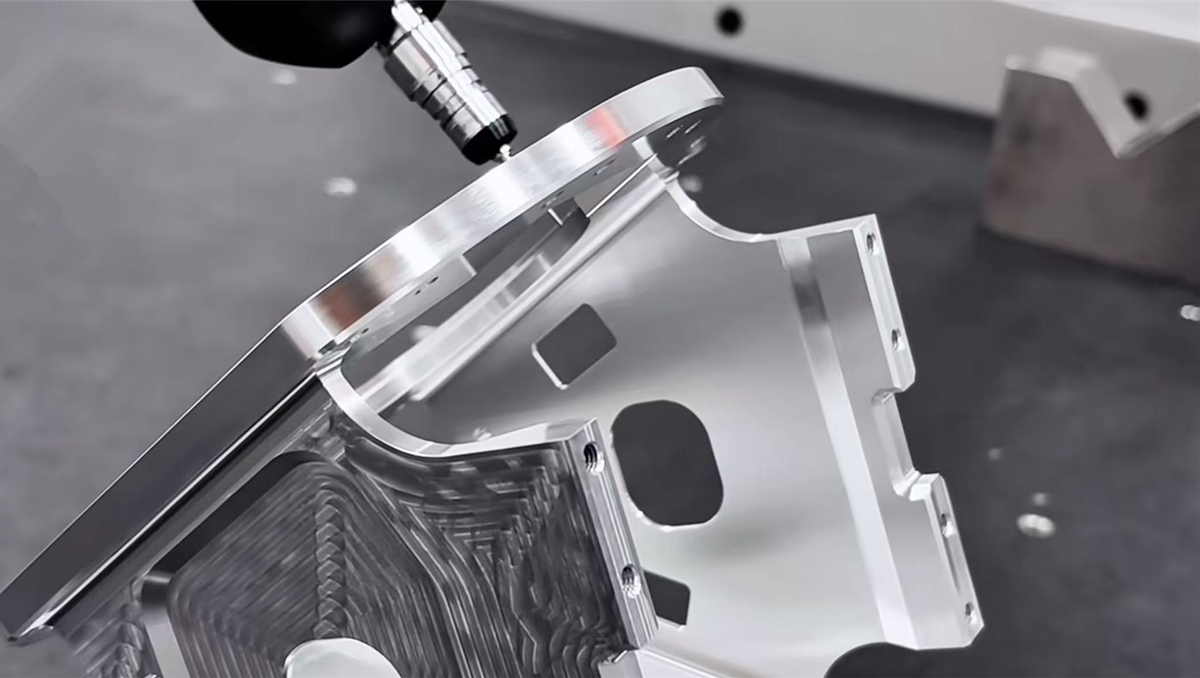
The mating surfaces and inner holes of robot joints require extremely high dimensional accuracy across the entire structure. Maintaining micron-level tolerances (±0.005mm) during multiple complex machining processes is crucial; even a slight deviation may lead to poor assembly fit, motion jitter, and shortened joint service life. To address this, we adopt a phased machining mode of "rough machining—semi-finishing—finishing", with natural cooling between each phase to release internal stress. We also use customized hydraulic fixtures to ensure stable and uniform clamping, and implement strict in-process inspection. A coordinate measuring machine (CMM) is used to real-time verify dimensional accuracy and adjust tool compensation in a timely manner to ensure stable compliance with tolerances.
02 Thin-Wall Machining of 6061 Aluminum Alloy
6061-T6 aluminum alloy is a high-strength, lightweight material, making it very suitable for robot joint components. The main machining challenge is to achieve perfect surface roughness (Ra ≤ 0.8μm) while preventing deformation of lightweight thin-walled parts—such parts are prone to structural damage during the removal of a large amount of material (from 14.5KG blank to finished product). We optimize cutting parameters and use a high-pressure cooling system to reduce cutting temperature, match customized hydraulic fixtures to reduce contact stress, and adopt spiral rough milling for efficient material removal and 5-axis linkage finishing. This method reduces cutting force while ensuring surface accuracy, effectively avoiding thin-wall deformation and structural damage.
03 Complex Curved Surface and Deep Cavity Machining
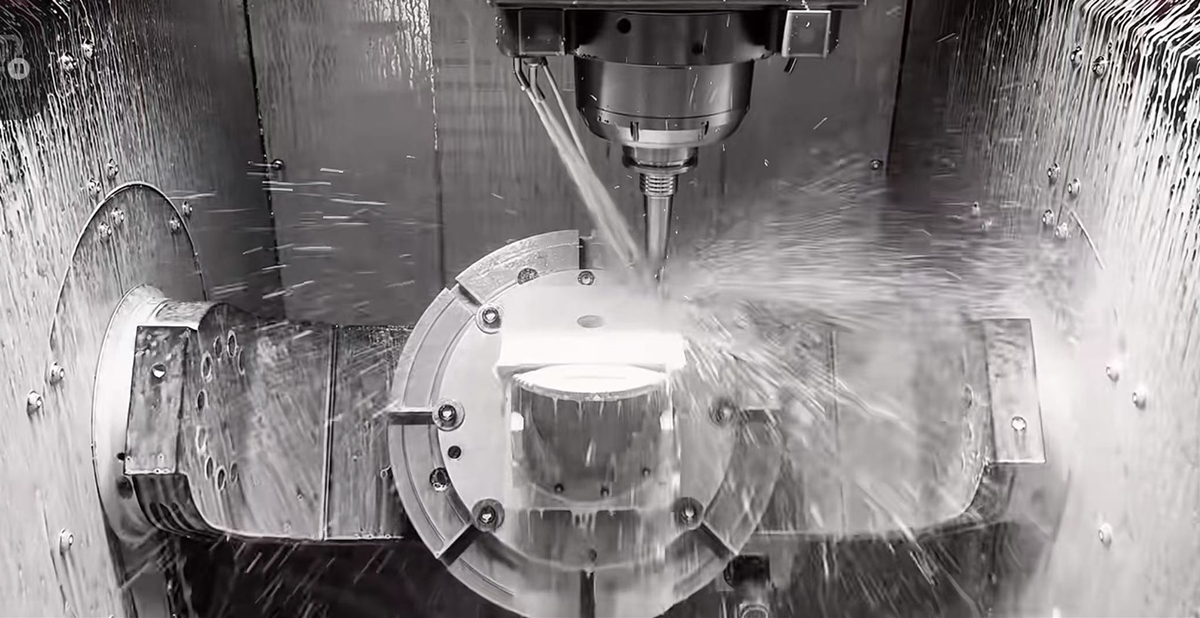
The complex internal and external structures of robot joints require the machining of precise complex curved surfaces and hard-to-reach deep cavities. These geometric shapes pose inherent risks of tool vibration and poor chip evacuation, which in turn threaten dimensional stability and the high-quality surface integrity required for enclosed areas. To address this problem, we adopt a multi-step strategy of "pilot drilling—spiral rough milling—controlled semi-finishing—5-axis linkage finishing", equipped with self-developed high-performance spindles and GTRT gear-driven cradle turntable technology, providing "hardcore" support for the precision machining of robot joints.
04 Rapid Delivery Requirement
Supporting a competitive robotics team requires a highly compressed production cycle. The core challenge is to deliver prototype products on time to ensure the team's competition preparation while meeting the strict requirements of high precision and complex machining. Relying on the efficiency of 5-axis CNC machining centers, we integrate and optimize the machining process to achieve multi-surface machining with one clamping, reducing clamping time. At the same time, we debug equipment in advance, optimize tool paths, and advance machining and inspection work simultaneously, controlling the delivery cycle of small-batch prototypes within 8 working days, balancing precision and efficiency to ensure on-time delivery.
Strict In-Process and Final Inspection
To ensure micron-level precision, we implement a strict inspection process:
• Use a coordinate measuring machine (CMM) for in-process inspection to verify dimensional accuracy after each machining process
• Use precision gauges for concentricity inspection to ensure no vibration risks
• Conduct surface roughness inspection to confirm Ra ≤ 0.8μm
• Use gauge tools to inspect threads and mating surfaces to confirm assembly compatibility
Inspection data is retained and filed for quality traceability and competition compliance review.
Client Feedback
"The Brightstar team provided excellent precision CNC machining services, with attention to detail, proactive communication and strong support. They made every effort to optimize the machining process, and with their precise and rapid customized manufacturing services, helped us complete the robot joint prototypes on time and achieve excellent results in the competition."
— Nova Robotics Lab, University of Engineering and Technology